ross2340

My Foray into Philosophy

We are all assigned a default operating system by society. Get a stable 9-to-5 job, white picket fence, climb the corporate ladder, manage the endless loop of domestic chores, and save the “real living” for retirement or brief two-week vacations.

But lately, a series of compounding events forced me to step off the treadmill and take a hard look at this setup. Losing people close to me has been a stark, painful reminder of just how short our time really is. When you combine that grief with the grinding exhaustion of a corporate environment where you feel you aren’t contributing anything meaningful or building real connections, you hit an existential wall. Life starts to feel like a complete waste of the precious time we have. In the office at 2pm on a lovely spring day I’d often be thinking “Why am I wasting my time here today?”. Becoming completely overwhelmed by it all, I decided I needed to reset my mental framework. 

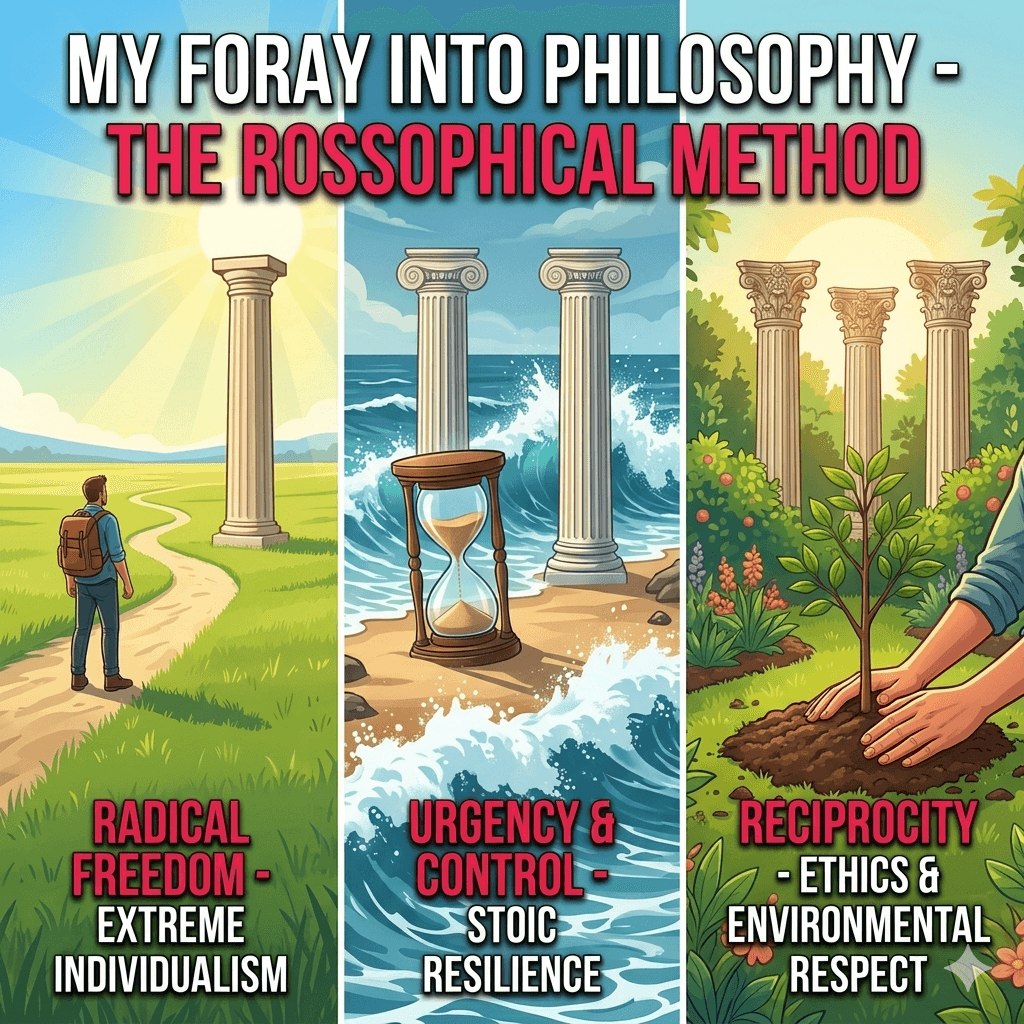
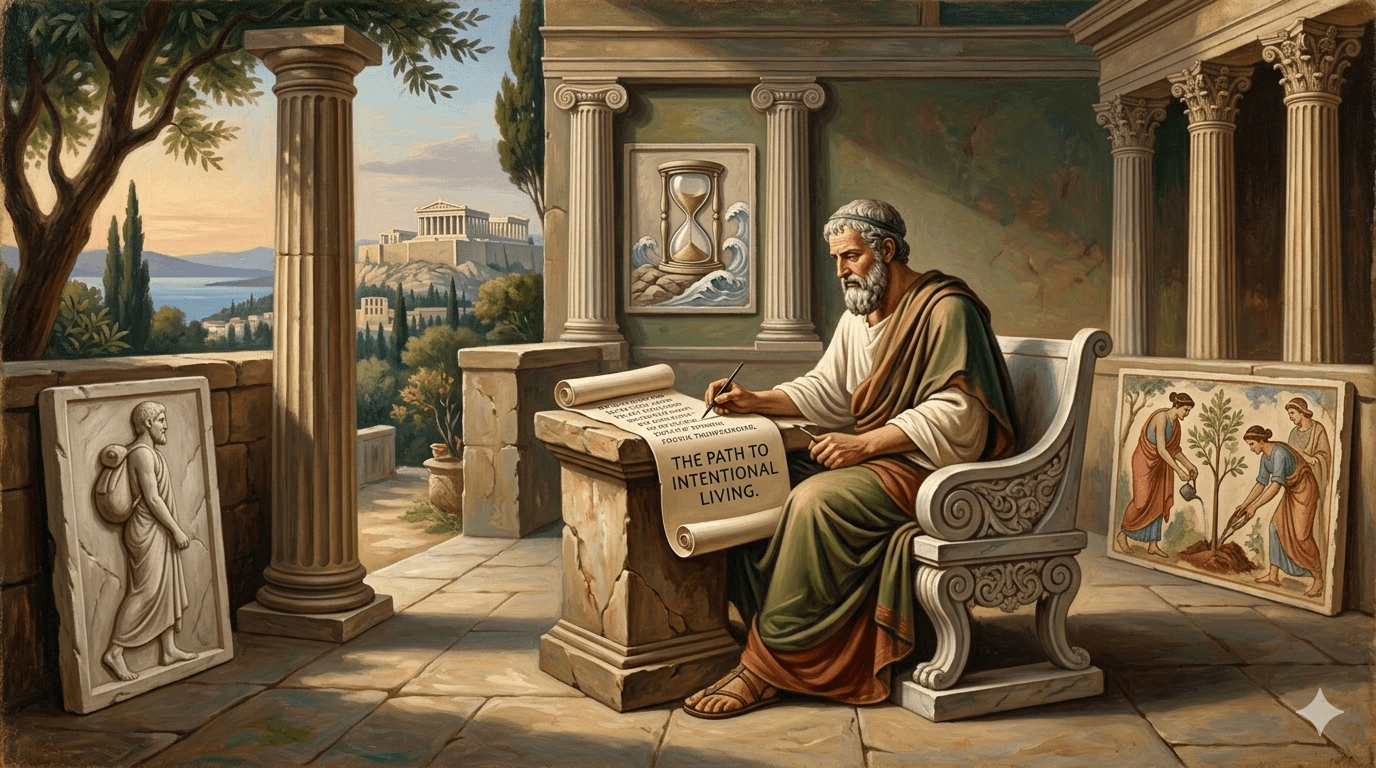
So, I started looking into philosophy. I wanted to see how historical thinkers dealt with the problem of a meaningless grind and how to build an intentional, high-utility lifestyle. It allowed me to examine what is meaningful to me, then design my own framework on my lifestyle – pulling learnings that I already inherently had but framing them into my own philosophy. Maybe you’ve heard of the Socratic method, well I have found The Rossophical Method. 


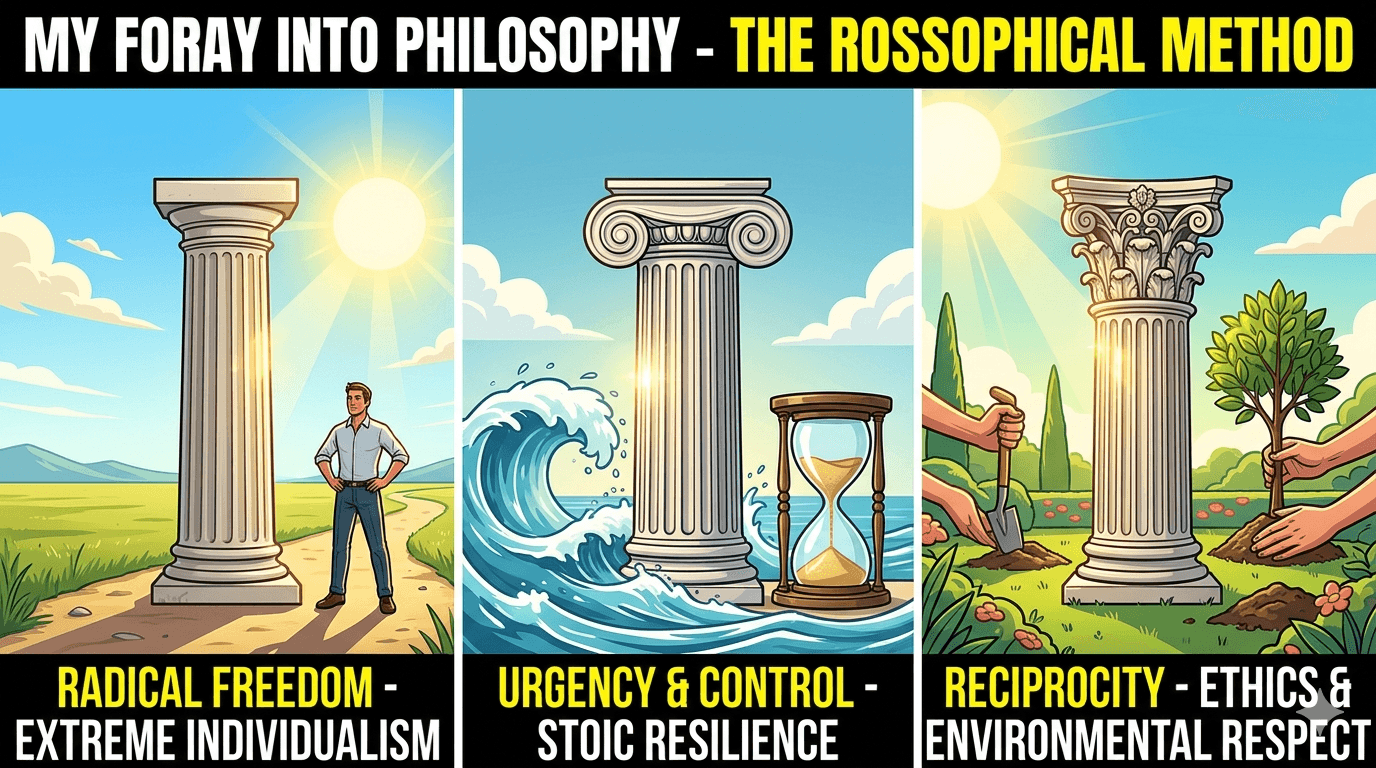
My 3 Theoretical Pillars

1. Radical Freedom: Escaping the Herd and Choosing Your Path 

A foundational pillar of my outlook comes from Jean-Paul Sartre and the concept of Existentialism. Sartre famously argued that “existence precedes essence.” In simple terms: you are born first, and it is entirely up to you to define who you are and what your purpose is. There is no pre-written script. Sartre called this Radical Freedom. It means you have the absolute power to choose what your life looks like and how you live it. Neither a deity, nor your family, nor your culture has predefined your track. It is entirely up to you to choose.

The danger, however, is that making your own choices takes immense effort, leading many to default to what Friedrich Nietzsche called Herd Morality. This is the uncritical adoption of societal norms simply because “everyone else is doing it.” Society hands us a default, pre-packaged checklist: get the rigid 9-to-5 corporate job, buy the suburban house with the white picket fence, have kids, and repeat.

There is nothing inherently wrong with any of those choices—if you explicitly want them. The trap is falling into them by default. Nietzsche argued that to live a truly authentic, life-affirming existence, you must strive to become the Übermensch (the Overman)—an individual who rises above herd expectations to actively forge their own values and design their own path. Whether you ultimately choose a conventional lifestyle or a completely radical one, the value comes entirely from the fact that you made the conscious choice. You are the one driving, not the herd. Only you can make your life happen.


2. Memento Mori: Urgency and the Dichotomy of Control 

If existentialism gives you the freedom to choose your path, Stoicism provides the urgency and the boundaries to actually execute it. To live a life of fulfillment, you have to confront a brutal reality: time is your most finite asset, and you are likely wasting it.

The Roman Stoic Seneca delivered a sharp reality check on this in his essay On the Shortness of Life:

“It is not that we have a short space of time, but that we waste much of it.”

We spend an immense amount of our limited existence on the tedious and the meaningless—soul-crushing work, trivial corporate dynamics, and endless administrative chores. To break out of this wasteful loop, you have to master what Epictetus called the Dichotomy of Control:

“We cannot choose our external circumstances, but we can always choose how we respond to them.”

Burnout and a wasted life happen when we spend our finite time agonizing over things we cannot control—like a toxic corporate culture, macroeconomic shifts, or the opinions of the herd. Stoicism demands that you ruthlessly divide your life into two columns: things that are up to you (your thoughts, your boundaries, your actions) and things that are not.
By applying this filter, you develop an acute sense of urgency. You realize that because your days are numbered (Memento Mori), you literally do not have the time to misallocate your mental currency on external corporate noise. You reclaim your time by focusing entirely on what you can control, ensuring that your energy is spent on living intensely right now, rather than merely existing.


3. Reciprocity: The Ethics of Social and Environmental Respect 

While the internal side of my philosophy is highly individualistic, the external side—how I interact with others—is anchored in traditional reciprocity from Confucian philosophy. 

The Golden Rule: “Do not impose on others what you yourself do not desire.”

  • Zhong (忠) is the positive duty: Doing your best for others.
  • Shu (恕) is the negative constraint: Restraining yourself from harming others.

When it comes to people, basic respect is the absolute baseline. If you wouldn’t want to be dismissed, exploited, or ignored, don’t do it to others. If you wouldn’t want to live in a degraded, careless world, don’t litter and take the extra two seconds to recycle. By focusing on these local, micro-scale acts of respect, we fulfill our duty to the collective without losing our individual freedom. 

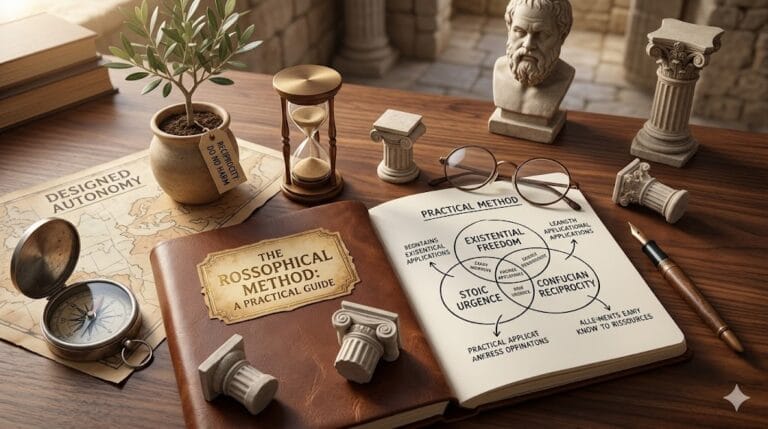
Some Practical Applications: The Rossophical Method

Philosophy without action is just an academic exercise. To make these concepts real, I’ve mapped them into a concrete blueprint for my life. Maybe you’ve heard of the Socratic method, well I have found The Rossophical Method. 

The Geography of a Reset (and Accidental Stoicism)

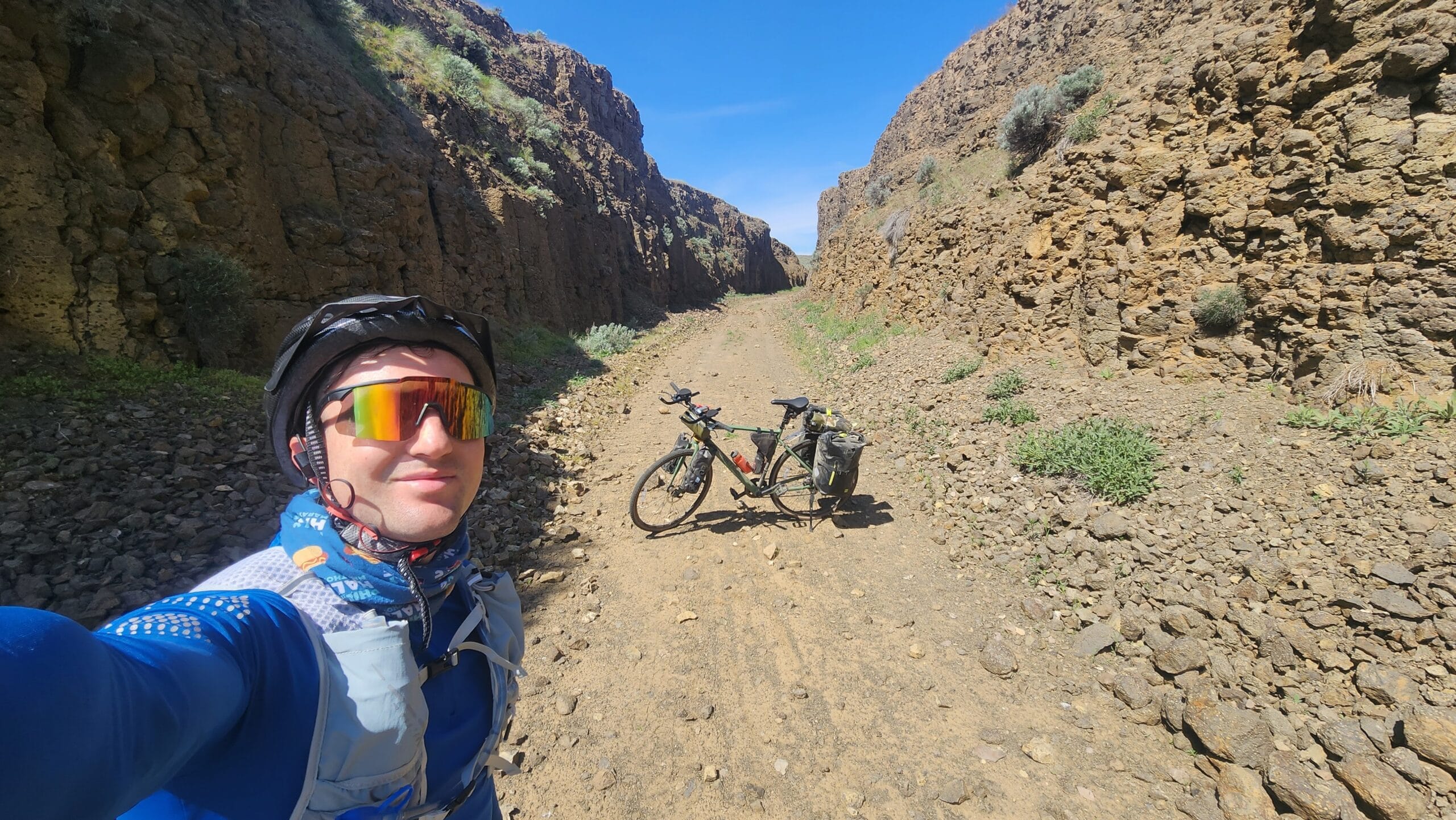
To kickstart this mental shift, I needed to get completely away from screens, corporate timelines, and comfortable routines. I decided to pack up a solo, hardcore bicycle touring trip across the country. I needed a massive circuit breaker to reset and find myself. Without consciously knowing it at the time, this trip was my entry point into practical Stoicism.

The ancient Stoics regularly practiced a concept called askesis—the deliberate choosing of voluntary hardship. Seneca famously advised taking a few days every now and then to eat the cheapest food and wear rough clothes. The philosophy is simple: by enduring difficult tasks, long days, and harsh weather on purpose, you fundamentally recalibrate your baseline. You learn exactly what you are capable of handling, and you realize that the daily corporate anxieties you left behind aren’t actual hardships at all.

Spending weeks out on the road, moving entirely under my own power with a loaded bicycle, provided that exact Stoic training ground. Stripping life down to basic physical effort, unpredictable weather, and immediate, tangible logistics creates immense mental space. When you are climbing a mountain pass in the pouring rain, life becomes incredibly simple. You endure the difficult in the moment, which makes everything else in normal life feel incredibly easy by comparison.

On that road, stripped of modern distractions, I finally had the time to think, reflect, and learn from these ancient masters—piecing together in my head the things that truly matter to me. Now, I’m writing them down.

Life Design

For me, applying Radical Freedom means redesigning life to find a fairer balance between responsibility and freedom. I want to be fair with my time: live more, work less.

Practically, that means shattering the assumption that employment must be an uninterrupted 40-year grind. Instead, my life design might look like working six-month contracts to fund deliberate, extended breaks between roles to travel, explore, and actually live. Life is fundamentally good—we need to go live it while we have the health to do so.

The Finances of Freedom & “Die with Zero”

This structural shift ties directly into the concepts found in Bill Perkins’ book Die with Zero, which challenges the traditional herd mentality surrounding personal finance.

The standard societal norm is to spend a lifetime working, amassing a massive net worth, only to pass away with a huge portion of that fortune unspent, leaving it to your heirs decades down the line. To me, unless you purposefully choose to exchange thousands of hours of your life purely to hand over cash later, this is a massive waste of life and time.

Of course, helping your kids is great. But they should be taught to fend for themselves, with parents providing assistance when it actually matters. It is vastly better to spend that money during your peak health windows, creating vivid memories and shared experiences with the people you love while you are all still here to enjoy them.

Micro-Scale Impact & Environmental Respect

If Shu and Zhong dictate how we treat people, they also dictate how we treat our surroundings. If everyone took responsibility for the minor, local details, the global environment would look entirely different.

Consider a simple example: littering and recycling.

Every year, the US discards around 40 billion aluminum cans into landfills. That is roughly $800 million worth of aluminum thrown directly into the rubbish, despite the fact that aluminum is infinitely recyclable and takes 95% less energy to recycle than to create from scratch.

It takes exactly two seconds to choose the correct bin. If every person committed to these tiny, effortless acts of universal respect—not littering, recycling a simple can, treating a stranger with basic courtesy—the world would be a demonstrably better place.

Conclusion: Choose Your Own Adventure

When designing your own personal operating system, you don’t need to fit neatly into a single box. You don’t have to be a pure Stoic or an uncompromising Existentialist. To put a twist on it: you don’t need to follow a philosophical brand name when you can create your own boutique blend. 

You can use Existentialism to claim your freedom, Stoicism and Nietzsche to empower yourself against societal expectations, and traditional Confucian reciprocity to govern how you treat the world around you.

Only you can make your life happen. Be mindful, be meaningful with your time, and don’t be afraid to update your framework as you progress through life. I am a different person today than I was yesterday—hopefully a better one. 

Socrates famously said that “the unexamined life is not worth living.” 

It took me 35 years to start actively thinking and framing my ideals into words and a moral code.

The Iron Horse Chronicles: 3,112km of Gravel, Grit, and Questionable Decisions

TLDR: I rode a $258 Walmart gravel bike from Seattle to St. Louis by linking historic, forgotten rail trails—surviving 3,112km with zero mechanical failures. Guided by the Stoic truth that you can’t appreciate comfort without enduring hardship, I embraced mandatory disasters: dismantling locked security gates, crawling over rubble inside a pitch-black collapsed tunnel, and battling soul-crushing 35 km/h headwinds. These trials cleared the palate for incredible highs—pristine tarmac, mid-country tailgate parties, and wild trail tortoises. It was a glorious, character-building descent into Type-2 fun that I would never repeat, but absolutely recommend to anyone with a machine that pedals.

Background

A couple of years ago, shortly after moving to the United States, I discovered something that immediately captured my imagination.

Old railroads.

Not the shiny passenger rail networks you find in Japan or China. The forgotten ones. The railroads that helped build America. The lines that pushed westward across mountains, deserts and plains, connecting towns that otherwise wouldn’t have existed. Many were eventually abandoned as the country fell in love with highways, cars and airports. But some survived in an unexpected form.

Instead of rusting away completely, they were converted into Rail Trails — long-distance walking and cycling paths built on the original railway corridors. The beauty of rail trails is that they inherit all the qualities that made railroads useful in the first place: gentle gradients, direct routes, huge bridges, tunnels and uninterrupted travel through landscapes that roads often bypass. As soon as I discovered these trails were scattered across the country, I did what any sensible person would do…. I opened Google Maps and spent a week connecting them together into one ridiculous bicycle route.

Gear List: The "Walmart Warrior"

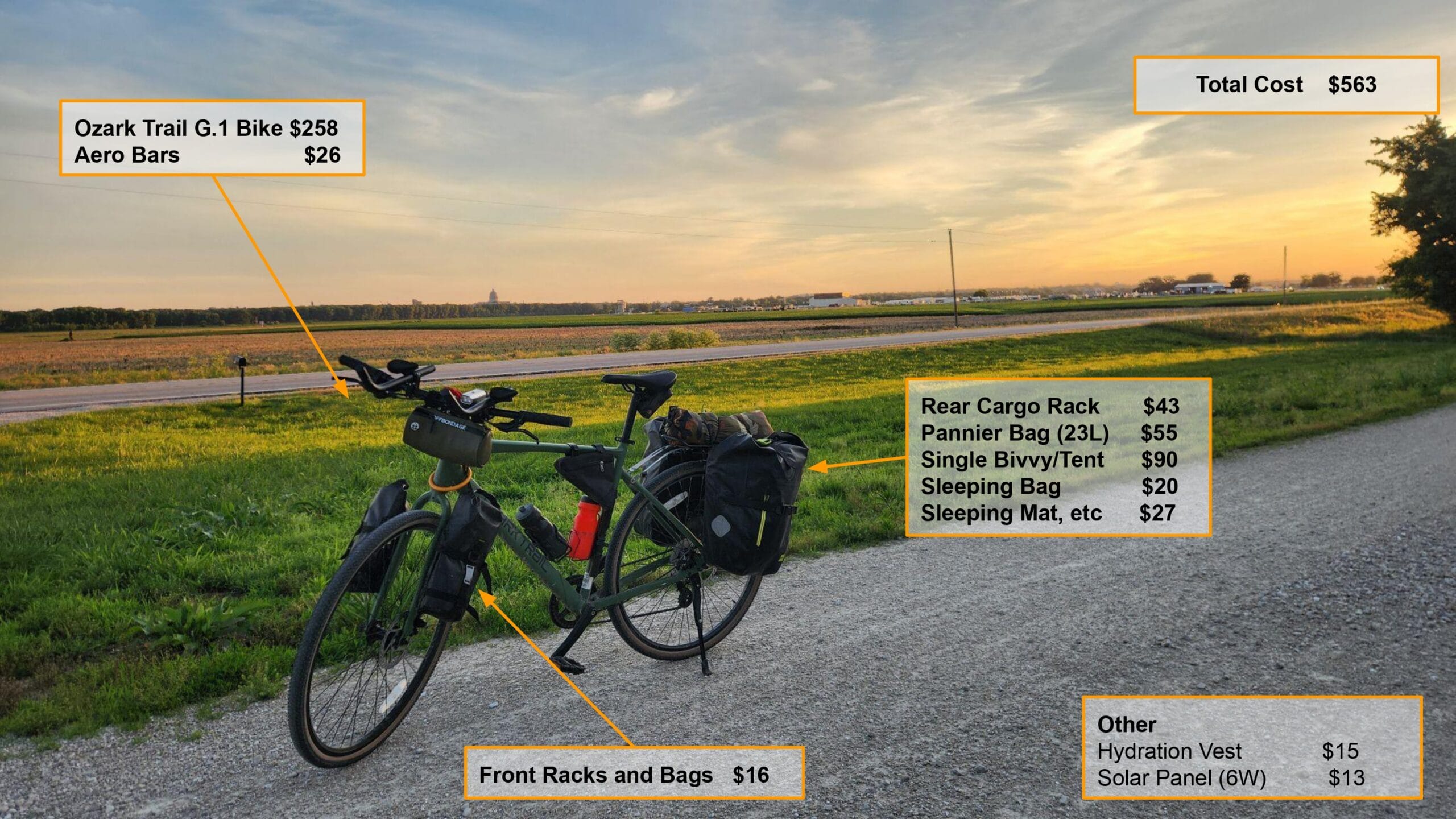
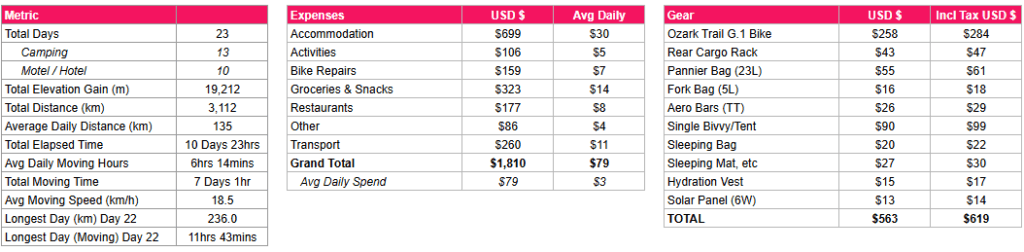
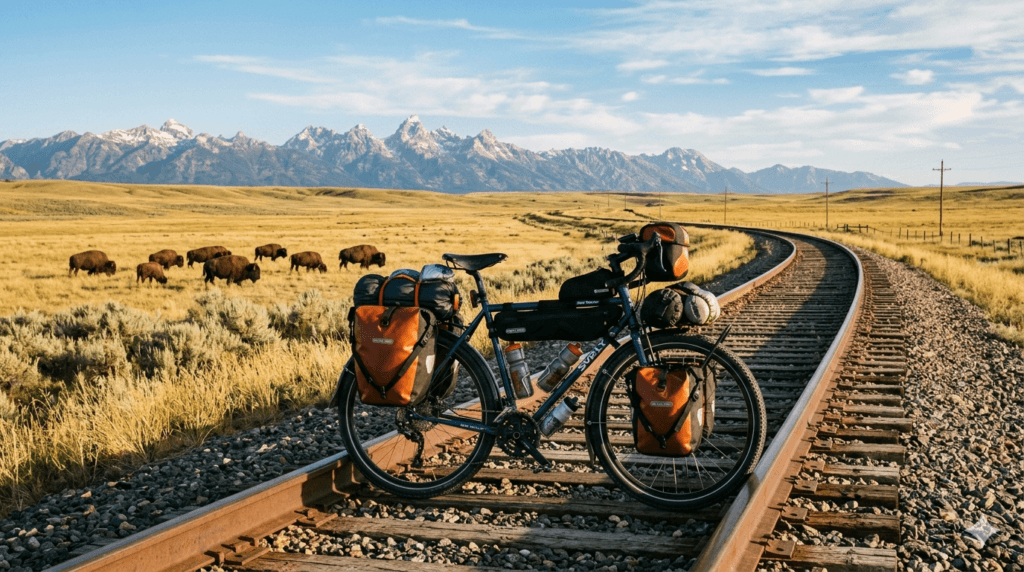
My steed for this 3,112km odyssey wasn’t some high-end, custom-built boutique rig. It was an Ozark Trail 700C G.1 Explorer—a flat-bar gravel bike I picked up at Walmart for $258.

When I rolled up next to others on the trails with a sleeping bag that cost less than a decent dinner and a bike that was being stocked next to the lawn furniture, I got a few looks. But as I pushed through the Cascades and into the heart of the Midwest, my $258 friend didn’t complain once. The tally of my mechanical issues across 3,112km? Zero. Not a frame failure, not a crankset snap, not even a catastrophic bearing blow-out. It survived the sand-traps of the John Wayne Trail, the vibration-heavy gravel of South Dakota, and everything in between.

The Route: A State-by-State Descent into Type-2 Fun

If your idea of a good time involves smooth tarmac, predictable tailwinds, and hotels that provide complimentary mints on your pillow, close this tab immediately. This section is not for you. 

Peace has cost you your strength. Victory has defeated you.” – Bane

To cross this continent via historic rail corridors, you must embrace a very specific, slightly masochistic philosophy: Fun is optional, but preferred. The disasters are mandatory. There’s a deep undercurrent of Stoicism that reveals itself when you’re stripping down a cheap bike in a dark ditch. The truth is, you have no concept of what is actually easy until you have willingly endured what is genuinely hard. Comfort is a lie we tell ourselves until we’re forced to recalibrate our baselines. You cannot truly appreciate the profound luxury of a flat, smooth trail without first navigating a collapsed mountain cavern or enduring hours of a relentless, soul-crushing headwind. The hardship clears the palate; it makes the ordinary feel extraordinary.

  1. Palouse to Cascades & The Snoqualmie / Sorrento Tunnel Disasters: Day 1 set the tone. I arrived at the Snoqualmie Tunnel only to find it locked up tighter than a Nun’s… office. Naturally, instead of turning back like a sane human being, I completely dismantled a security gate, stripped my panniers, disassembled my bike piece by piece to squeeze through the gap, and rebuilt it in the dark.

    If that was a warning from the cycling gods, I ignored it. By Day 4, I hit the Sorrento Tunnel in Idaho. The maps said it was open. The reality was a 2,500-foot collapsed mountain cavern. I scrambled over tons of jagged rubble inside the pitch-black void, dragging a 50kg Walmart bike, only to emerge on the other side into a literal swamp choked by a graveyard of 100 downed trees. I spent two hours wading through mud, lifting a cheap heavy frame over logs, and spotting fresh bear prints, fundamentally questioning my right to exist.

  2. Coeur d’Alene & Norpak Trail: After the tunnel trauma, the Coeur d’Alene was pure cycling heaven. Seventy miles of pristine tarmac, majestic bald eagles, and enough cute baby goslings to temporarily make me forget the severe chafing ruining my life. Because of the Sorrento disaster, this felt like riding through paradise. Then came the Norpak section. It was stunning… until it wasn’t. The trail vanished into another brutal two-hour labyrinth of freshly fallen pines, turning my cycling trip back into a competitive log-carrying event.
    The punchline? Days later, I met a fellow rider named Rex on the trail a few weeks later. He casually mentioned, “Yeah, I saw some absolute maniac’s tracks through the Norpak trail and thought, well, if they made it, I can too!” I just stared at him. “Rex… that maniac was me.”

  3. North Dakota (The Industrial Wasteland): Step one of arriving in Williston: look around, inhale the heavy pollution, and ask yourself, “What crime did I commit to end up here?” It was a bleak, character-building lesson featuring 100 miles of relentless oil fields, sub-freezing campsites, howling coyotes that sounded far too much like hungry wolves, and washing myself using a single water bottle of sketchy, non-potable water. Good times. I ended up escaping via the classic hitch hike. 
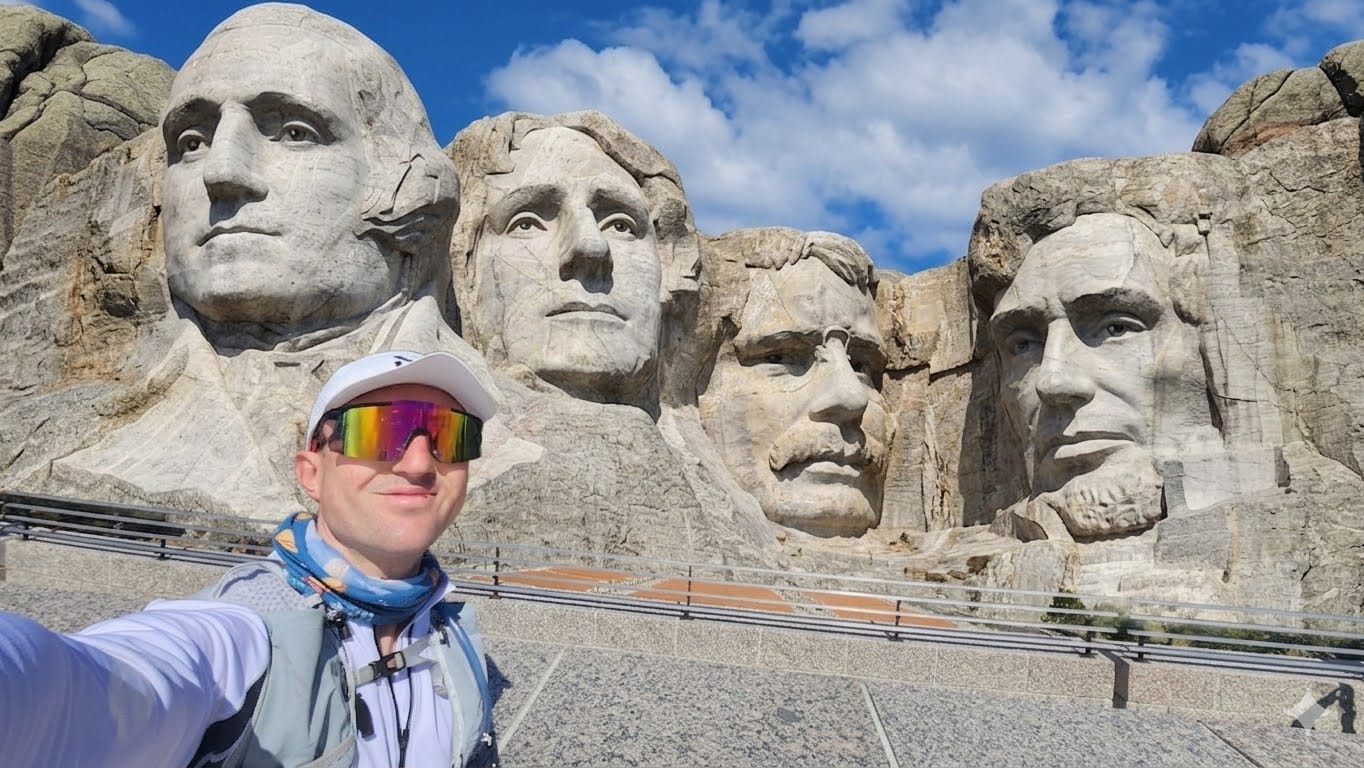
  4. The Mickelson Trail (Black Hills): This absolutely over-delivered. For a $5 donation, you get magnificent tunnels, historic wooden trestles, and mountain carvings like Crazy Horse. It had this rugged, cowboy outback aesthetic that felt genuinely epic, made even better by the miraculous presence of actual, functioning water stations. After North Dakota, a water station felt like the Ritz-Carlton.
  5. South Dakota & The Badlands: The Badlands are visually spectacular, resembling the surface of Mars. Unfortunately, Mars has a brutal 35 km/h headwind that slaps you squarely in the face for hours across completely exposed gravel roads. When you are pushing maximum wattage on aero bars with wide panniers acting as literal sails—and moving at the speed of a brisk walk—you have plenty of time to re-evaluate every life choice that led you to South Dakota.
  6. The Cowboy Trail: Billed as Nebraska’s finest. In reality, it is a psychological experiment in sensory deprivation. It is flat, it is straight, and it is so mind-numbingly monotonous that passing a single distinct-looking tree feels like a festival event. Luckily for me, I bumped into a fellow rider on the trail and we shared the rest of a day and then enjoyed a soggy 2nd day on the trail. Rex, keep it up you legend!
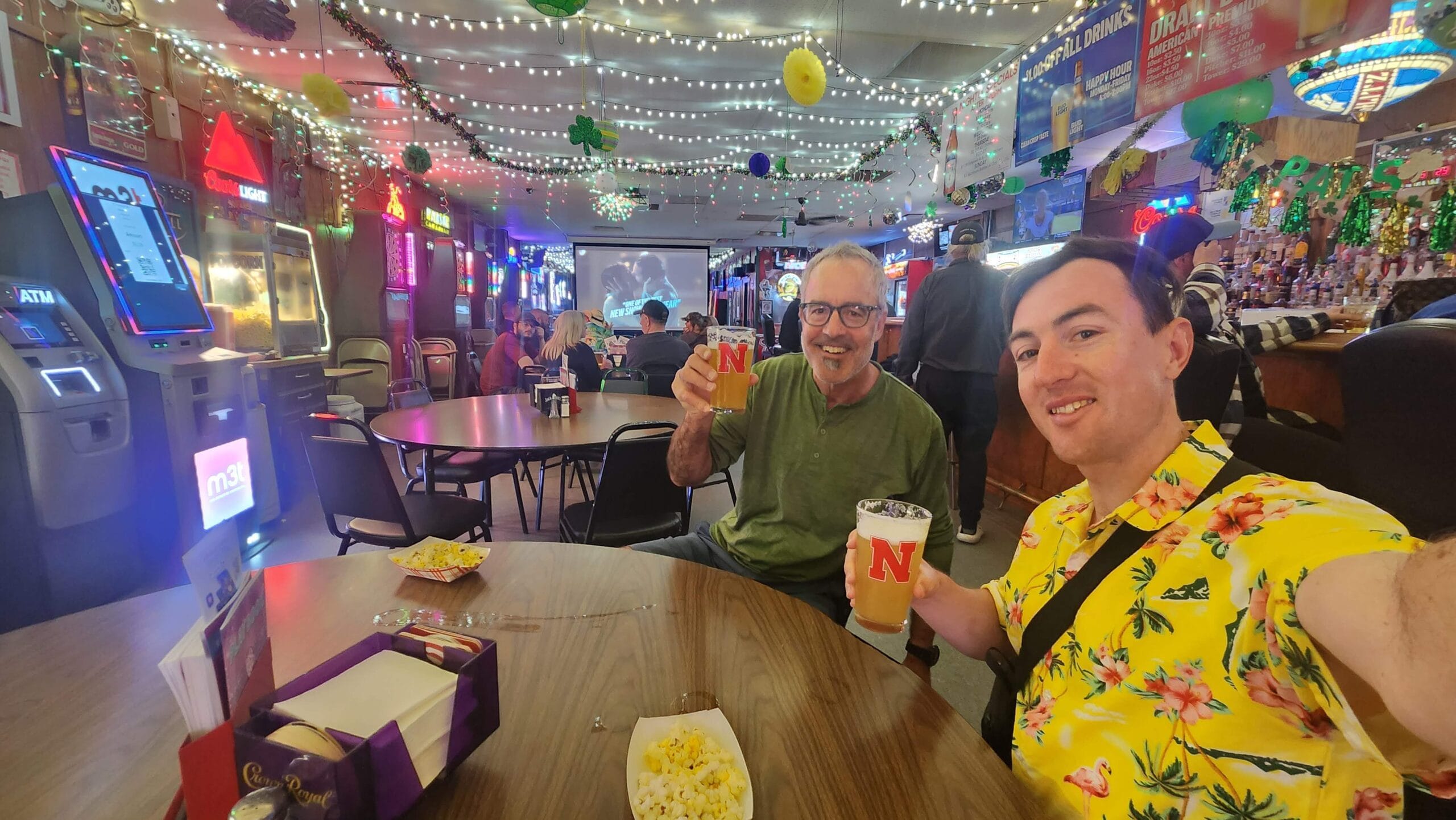
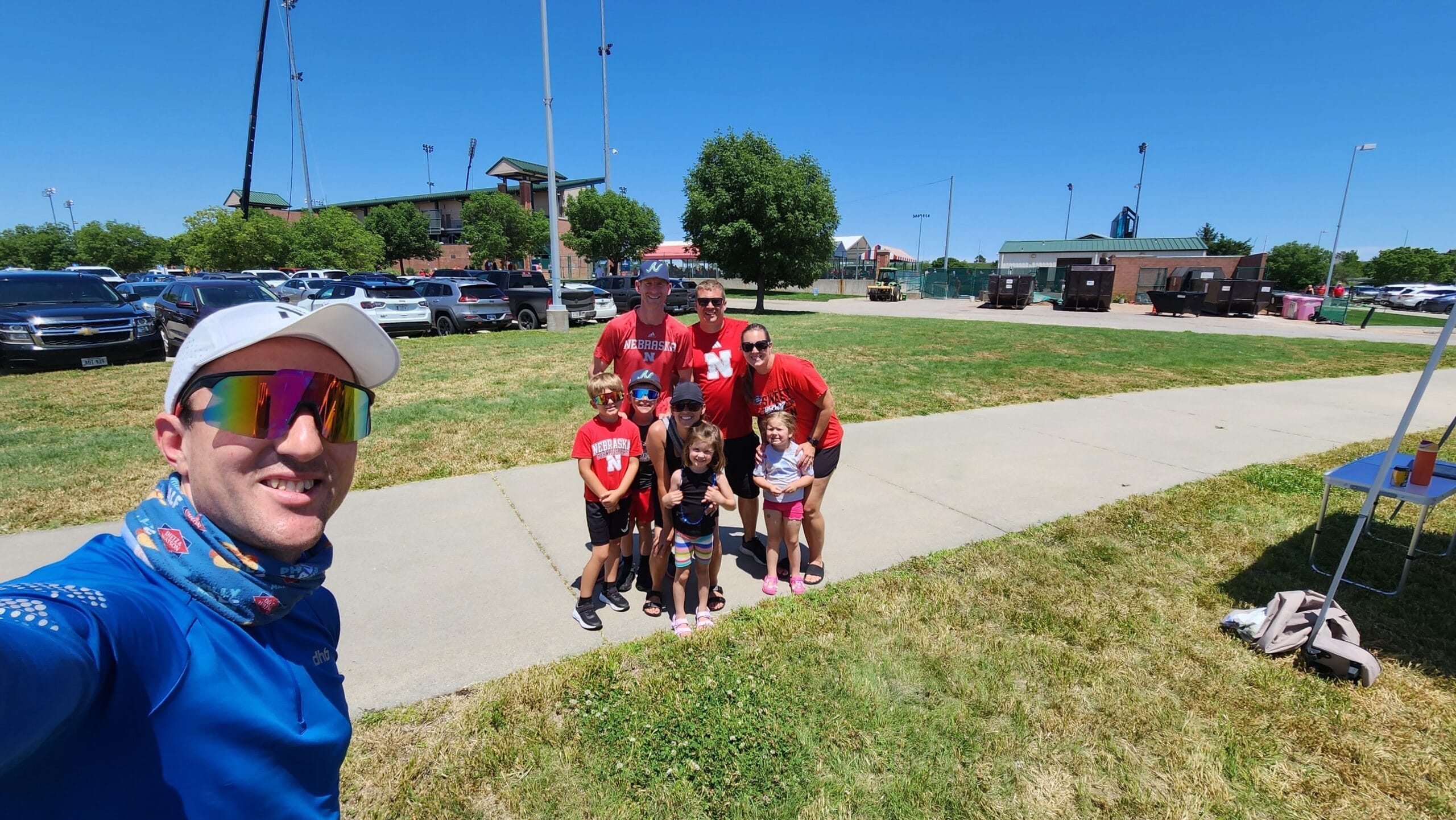
  7. Flint Hills & The Nebraska Cornfields: Imagine cycling through a steam room filled with corn. The heat and humidity were oppressive, but Nebraska redeemed itself when I was invited to my very first college Baseball tailgate party (Go Huskers! 🌽). I am pretty sure crushing beers and eating grilled meats in a stadium parking lot is a legal prerequisite for US citizenship. 🦅
  8. The Katy Trail (The Victory Lap): The ultimate reward. Smooth, impeccable crushed limestone, perfectly signed, and entirely flat. It was on this trail that I encountered a wild tortoise hanging out on the path. He was incredibly cute, and I have officially decided he is my future pet. A beautifully civilized end to a completely uncivilized journey. You earned this ease because you survived the hard. I had picked up an old railway nail early in Washington State and decided I would place in where I end my trip. So I placed it in Saint Charles, Saint Louis where I ended the Katy trail. Puttin that final nail in wild adventure.
  9. What to do with my noble steed now? Give it away to someone who will appreciate it :), there was a nice homeless lady down the road from my motel and she was over the moon about getting the bike, sleeping bag and othe gear. 

The Post-Mortem

When you sum it all up, I rode a modified $258 Walmart bike—bundled with cheap gear for a grand total of $563—most of the way across the United States. I dragged it through collapsed mountains, waded it through swamps, pedaled it across desolate oil fields, and camped out on top of the world.

Would I ever do the entire trip again? Absolutely not. My body has still not forgiven me. But would I ride these specific rail trails again? In a heartbeat. They are the hidden, rugged veins of the country, and if you have a high tolerance for type-2 fun and a bike that pedals, you need to go see them.

Ross' US Rail Trails Map

USA Rail Trails 2026

Ross' Rail Trails Highlights Reel

Data and Stats

My Iron Horse: 3,700km on Great American Rails

Starting May 1st, I’m taking a much-needed break from the digital world. I’ve decided it’s time to give my eyes a rest from screens and complex spreadsheets in favor of the vast horizons of the American prairies and mountains. This trip is about disconnecting from the “hustle” and reconnecting with what really matters and I think a 30 Day Gravel adventure into some of the most remote parts of the USA is the perfect way to do that. 

The Mission: Seattle to St. Louis:
The goal is to ride my own Iron Horse (bicycle) from the Pacific Northwest all the way to St. Louis using a combination of human power and historic iron. To keep the journey as enjoyable as possible, I am intentionally avoiding highways and heavy traffic. Instead, I’ll be following the historic rail lines that shaped this country, riding the gravel trails where the tracks used to be and jumping on the train where they still run. This takes me back to 2018 Japan touring

  • Total Cycling Distance: I’ll be pedaling approximately 3,700 km of gravel and backroads.  
  • The Amtrak Link: I’m incorporating the Empire Builder line for the segment from Whitefish, MT to Williston, ND to bridge the Great Plains.  
  • Total Elevation Gain: My legs will be tackling over 28,000m of climbing—roughly the equivalent of ascending Mount Everest from sea level over three times.
  • During this vertical grind, I’ll be passing through Washington, Idaho, Montana, North Dakota, South Dakota, Nebraska, Kansas, and Missouri.

The Route: Following the Iron Horse

By utilizing the “Rails-to-Trails” network, I can stay off the main roads and immerse myself in the landscape. Here are the major converted rail systems I’ll be tackling:

Trail Details and Links

Rail Trails:

Trail NameDistanceElevation GainState
Palouse to Cascades Trail290 km1,450mWashington
Trail of the Coeur d’Alenes120 km300mIdaho
George S. Mickelson Trail175 km2,000mSouth Dakota
Cowboy Recreation Trail310 km550mNebraska
Flint Hills Nature Trail140 km350mKansas
Katy Trail State Park395 km550mMissouri

Other Trails:

Trail NameDistanceElevation GainState
Mullan Road / Pass110 km1,200mMontana / Idaho
Maah Daah Hey Trail230 km3,800mNorth Dakota
Black Hills Scenic Loops150 km2,500mSouth Dakota
High Plains Connectors450 km2,800mSouth Dakota / Nebraska

Cyberpunk 2077: A Personal Crisis Caused by a Digital Ghost

SPOILER WARNING: The following post contains major spoilers for the main story and endings of Cyberpunk 2077. If you haven’t sat through the credits yet, you might want to jack out now.

TLDR: Night City won. I sold my soul to Arasaka for a sterile lie and lived to regret betraying Johnny. A raw look at identity, corporate dystopia, and why I’m going back to burn it all down.

I. The Surreal Aftermath

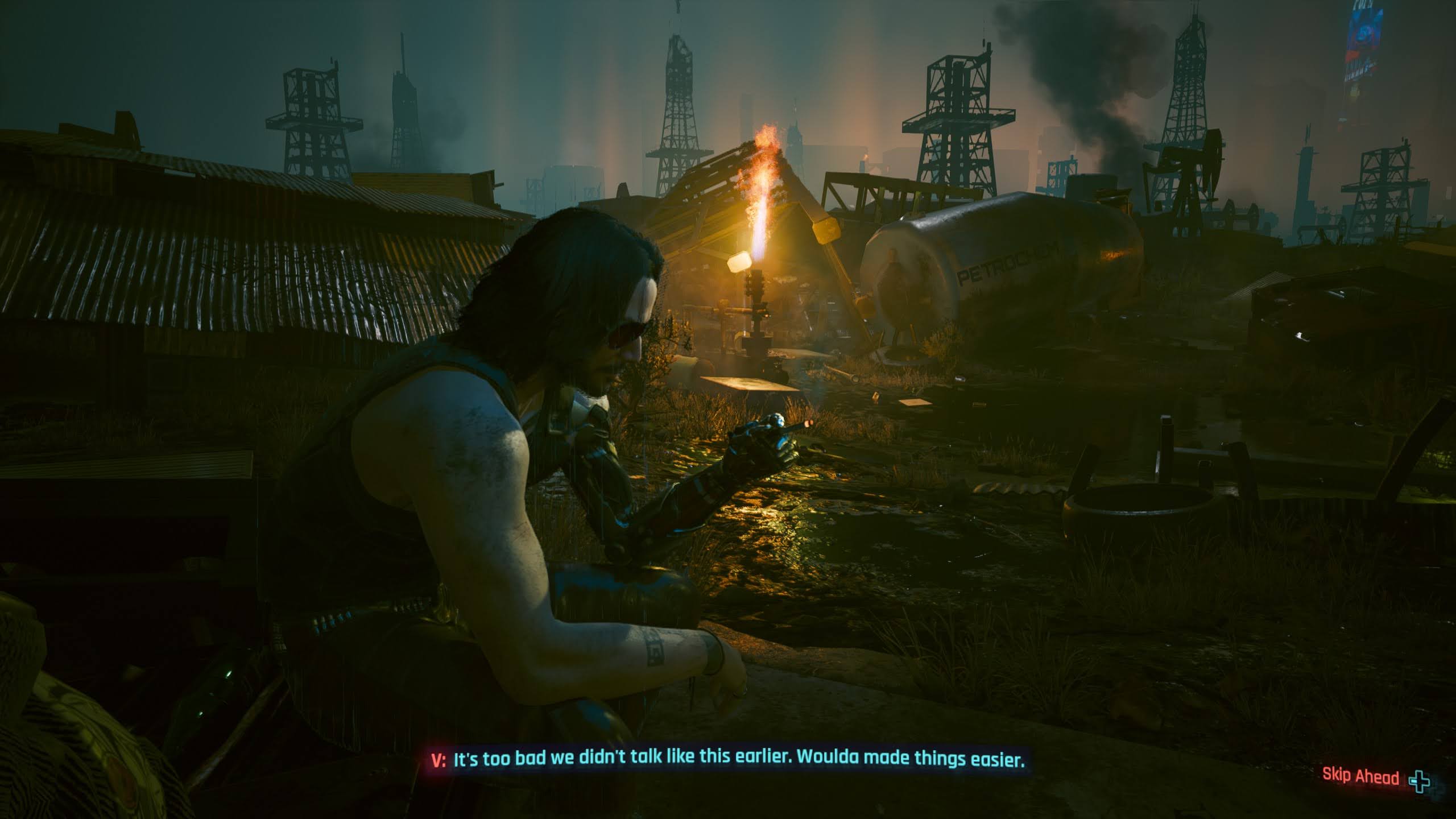
I’ve just finished my first playthrough of Cyberpunk 2077 (base game)… and I lay in bed last night struggling failing to fall asleep because I feel as if there’s a haunting voice in the back of my mind saying 

“I’ll tell you what I see. I see a dead man walkin’. A man who’s lost everything, even his own soul.”

For the previous few days, I’ve been trying to process what just happened. To put it plainly: it was a surreal experience. I’ve played a lot of games—The Witcher 3Elden Ring, even Hogwarts Legacy and usually, I walk away feeling like I mastered the narrative. I make my choices, I accept the outcomes, and I move on. But this? I’ve never played out a story like it. For the first time in my life as a gamer, I found myself paralyzed by the dialogue. I genuinely didn’t know what the “right” answer was.

It wasn’t just a game; it felt like a direct interrogation of my own ethics and morality. I’m left with a feeling of profound regret that I didn’t see coming. 

II. True Immersion in a Technological Dystopia

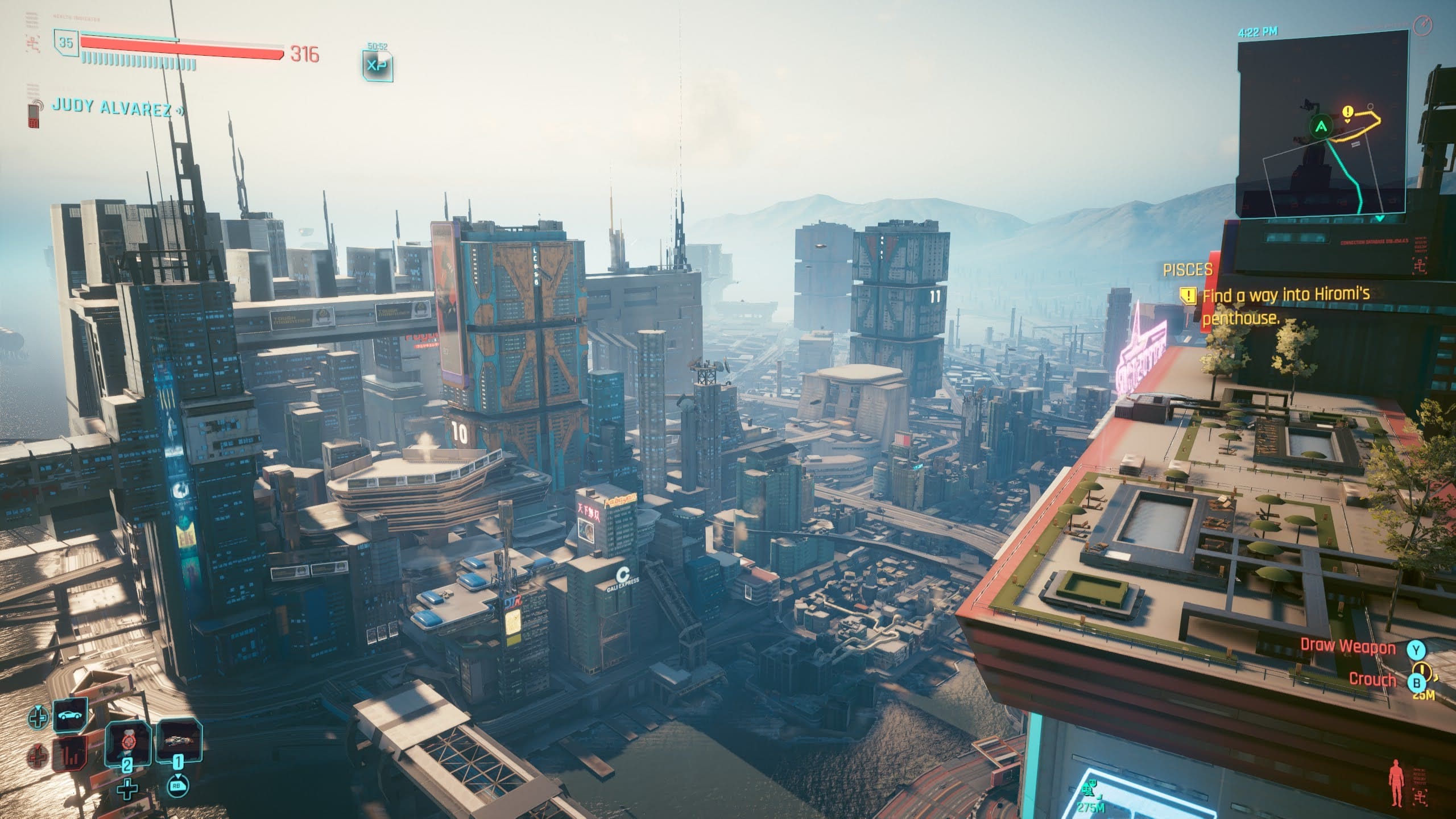
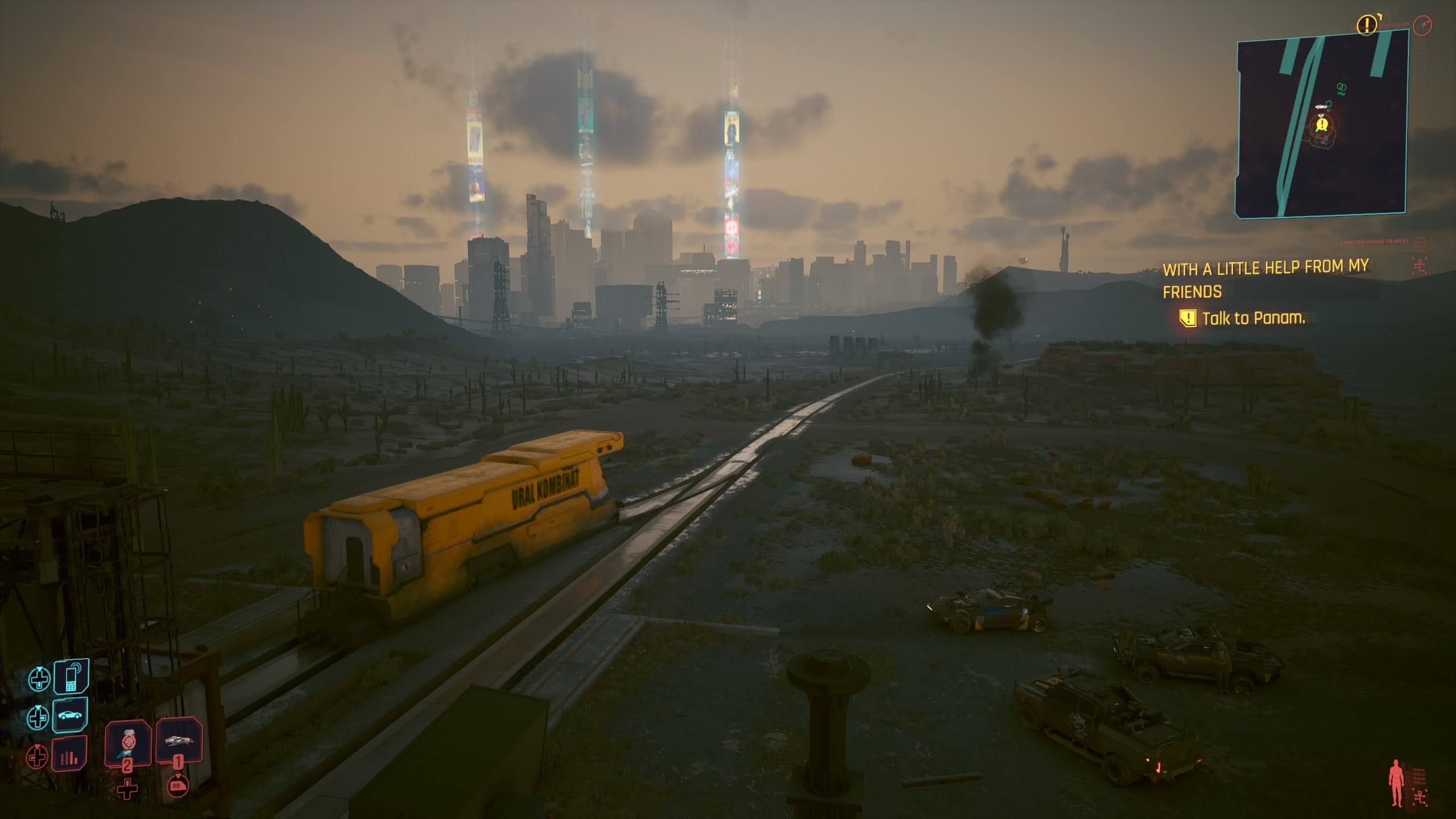
The writing and world-building in this game are on a level I wasn’t prepared for. People call it an FPS or an Action-RPG, but to me, it felt almost like a first-person visual novel. Early in the game, I spent hours just walking. I avoided fast travel because I wanted to soak in the atmosphere—to see the way the light hit the grime and the neon. That slower pace gave me a much deeper appreciation for the game’s thematic exploration of this technological dystopia.

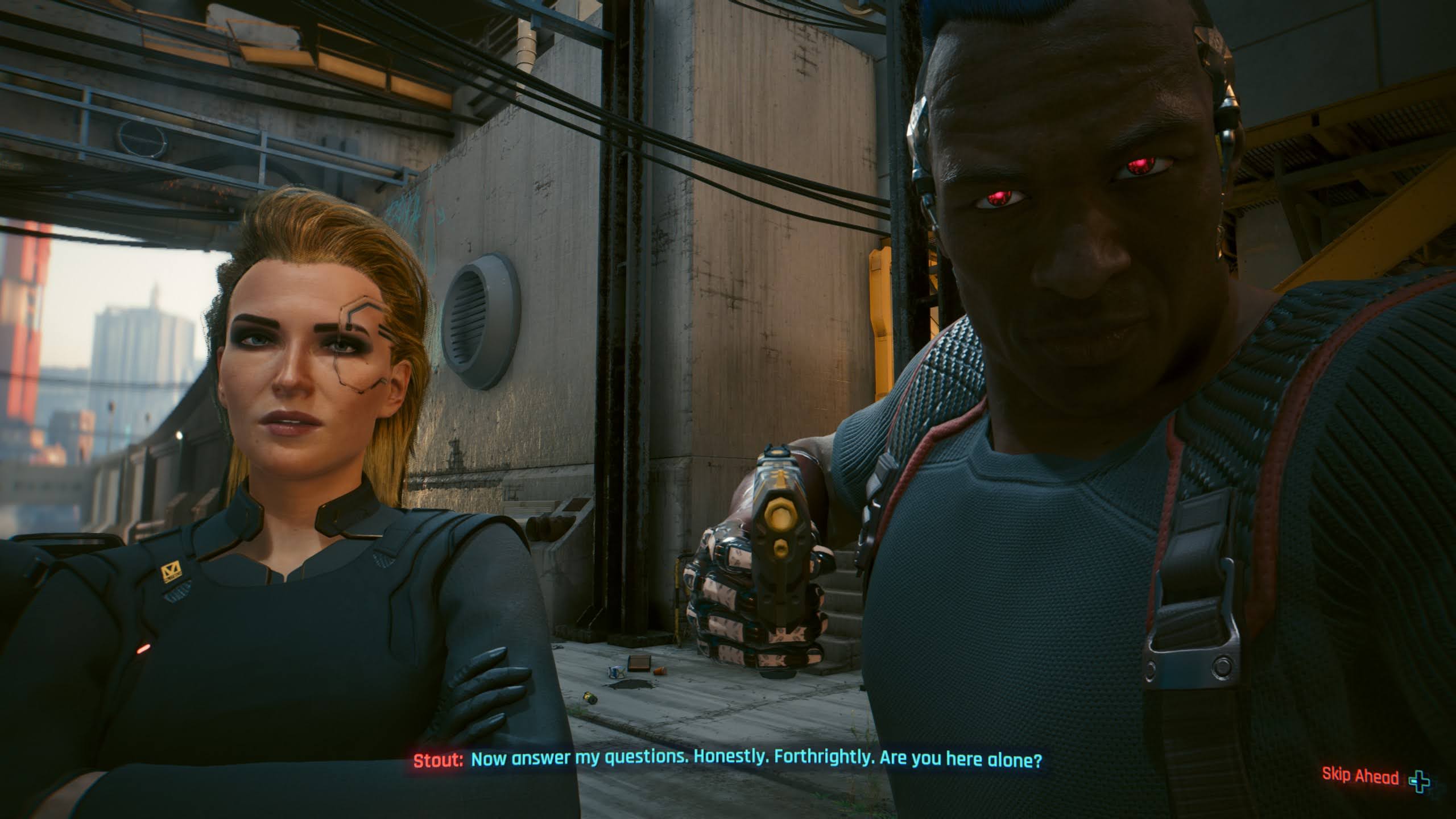
The immersion isn’t just about the rain-slicked streets; it’s in the quiet, uncomfortable moments. The raw themes, the camera angles, the tight close-ups, and the facial features are so detailed that you can actually see and feel the emotions of the person standing in front of you. When a character looks at you with desperation or disappointment, it hits with a weight that most games can’t replicate. You see the constant, suffocating advertisements for products nobody needs, the random NPCs on the street corner struggling with homelessness and violence, while the ultra-rich continue to get ultra…richer. You don’t just see the inequality; you breathe it in, you feel it.

III. The War of Identity: Who Am I Playing?

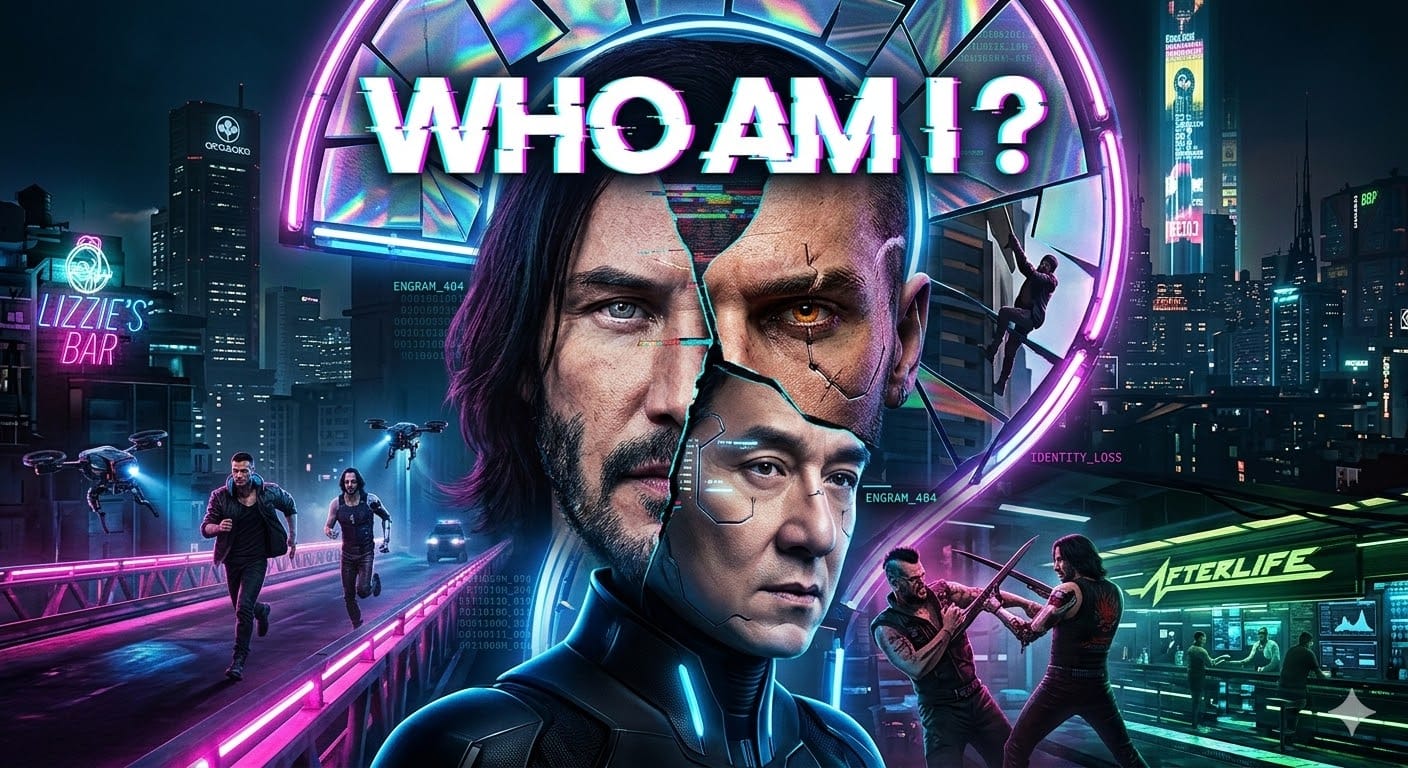
This is where the struggle became internal. Usually, I play games with a very specific mindset: I play “Ross” in that world. I apply my own logic and my own personality to the character’s shoes. But Cyberpunk forced a crisis of identity on me that I couldn’t escape.Throughout the entire story, I couldn’t decide which option was “good.” I spent way too much time staring at the dialogue wheel, flipping between choices, overthinking the potential fallout. I never really knew who I was. Was I V? Was I Johnny? Or was I still trying to be Ross? This identity crisis was forced upon me by the creators, and honestly, well done to them.

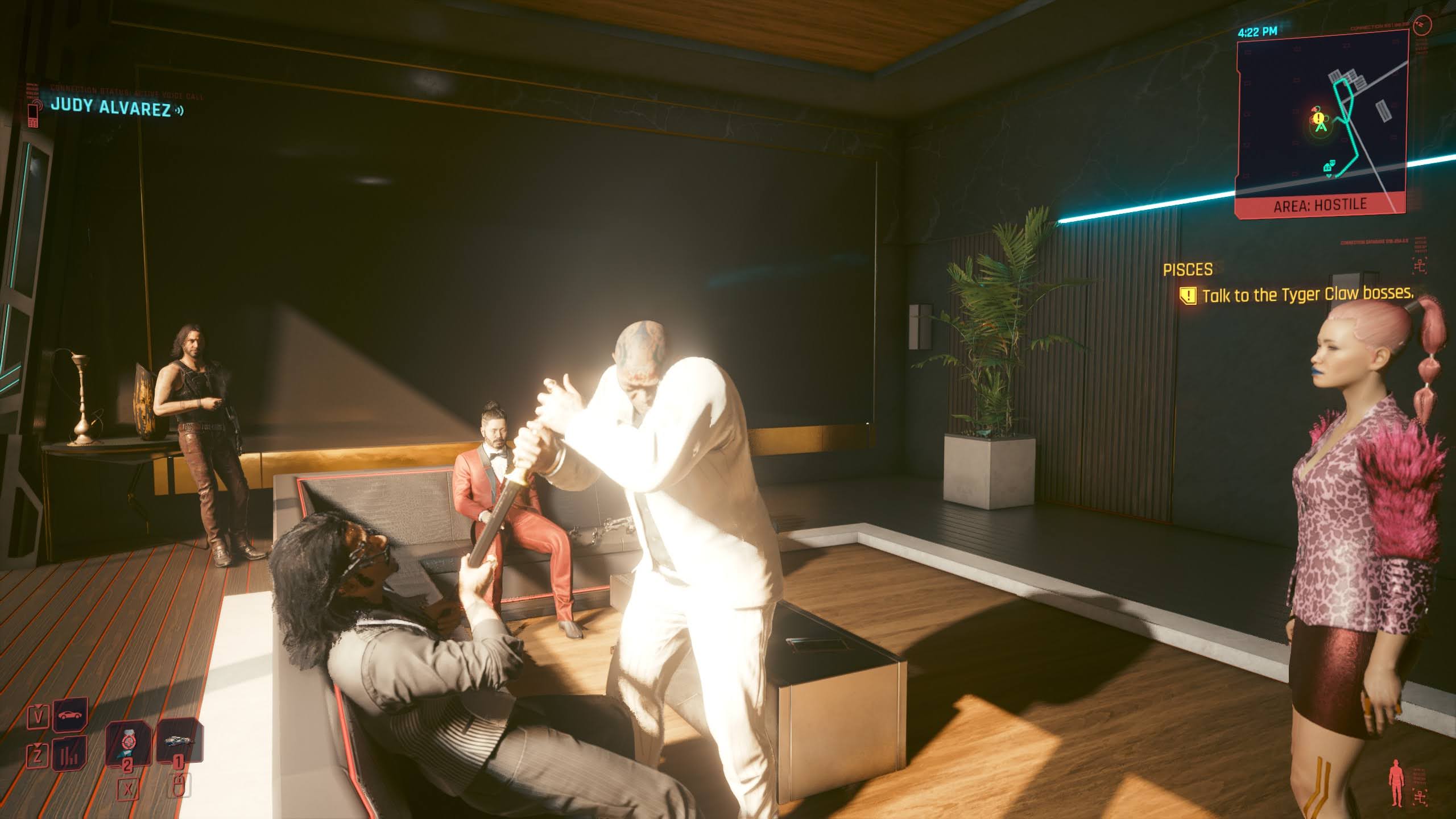
This led me to my final, defining decision. When it came down to the wire, I chose to go solo. I didn’t want to drag Panam and Rogue into a bloodbath for my sake. I didn’t want to let Johnny take over. I decided to work with Hanako Arasaka directly. At the time, it felt like the most “Ross” thing to do: a pragmatic, calculated risk to secure my own survival. I thought, “This is my life, and I am choosing to fight for it on my own terms.” But as the mission progressed, the feeling shifted. “You pick the cards to your own destiny, and I had drawn the Devil.”

IV. The Romance Misstep: I Thought I was a Genius!

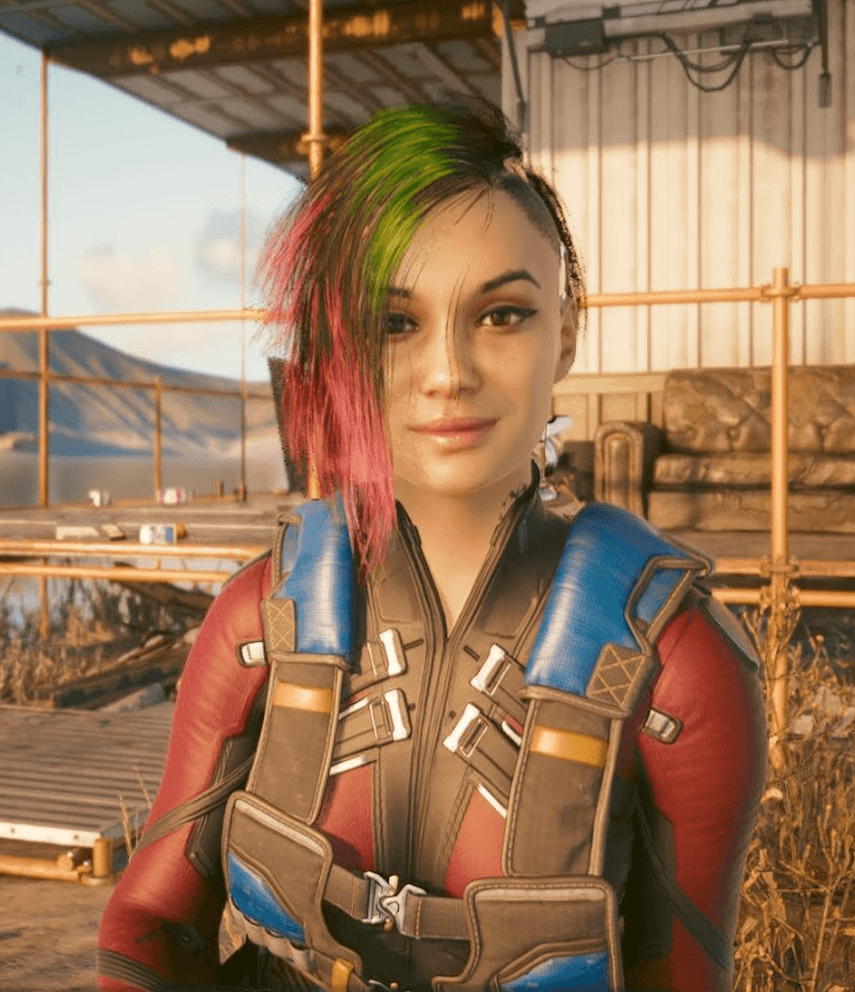
On a lighter note, I went into this thinking it would be like the Witcher 3—pick between a couple of main options or end up alone. I focused all my attention on Judy, thinking I was making progress. I was a genius…

It was an amusing, if not disappointing, realization that no matter how much effort I put in, I could never change the outcome. I didn’t know at the start of the game that by picking a male character – I had already hard-coded my failure in that specific scenario. In Night City, some doors are locked before you even know they exist and you end up outside without even a doll or a braindance for comfort…

“Sorry, V. I think there’s a glitch in your optics. You’re looking for a romance quest, but I’m strictly a ‘girls-only’ club. Maybe try your luck at the Afterlife?”

V. My Personal Crisis Caused by a Digital Ghost

The final act of the game was a slow-motion car crash for my conscience. Every line of dialogue that crossed the screen felt like I was sinking deeper and deeper into a decision I knew I was going to regret. But there was nothing I could do to change it. I had committed.

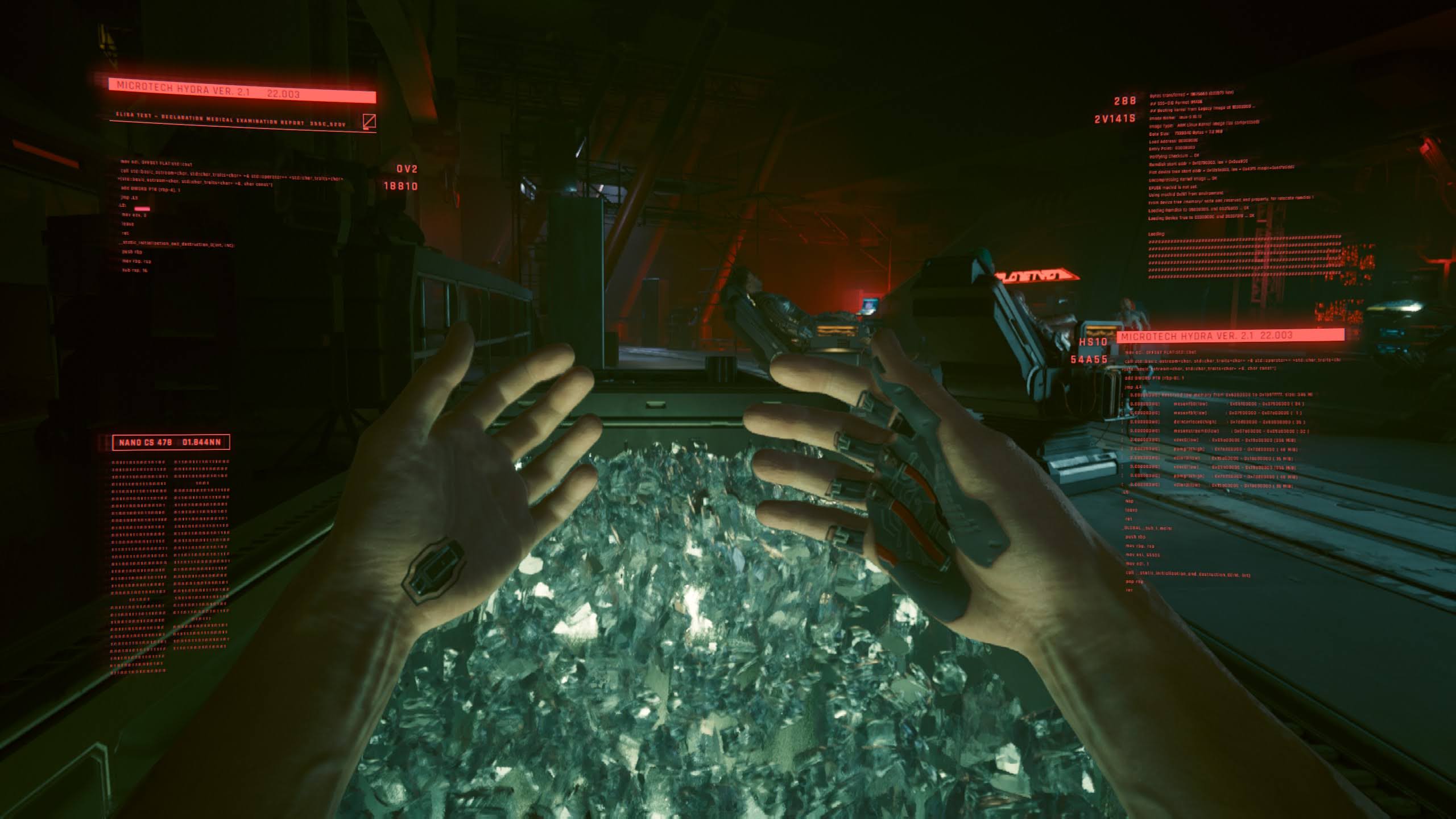
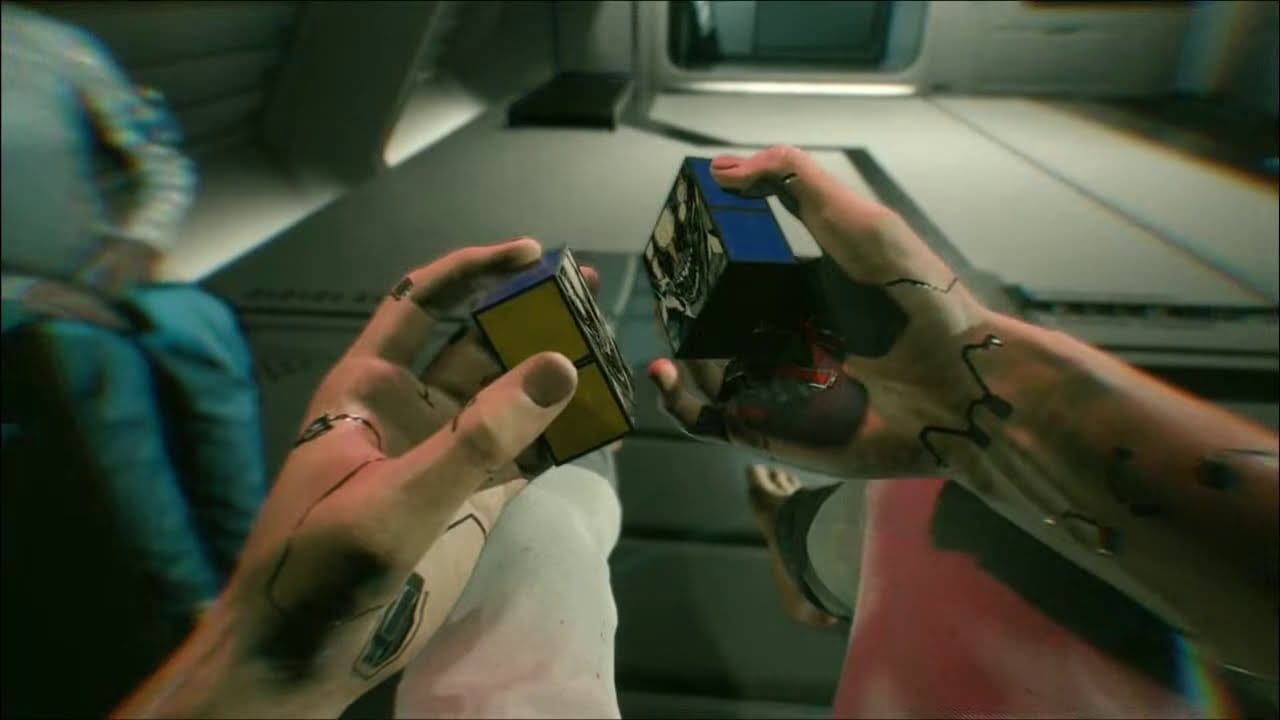
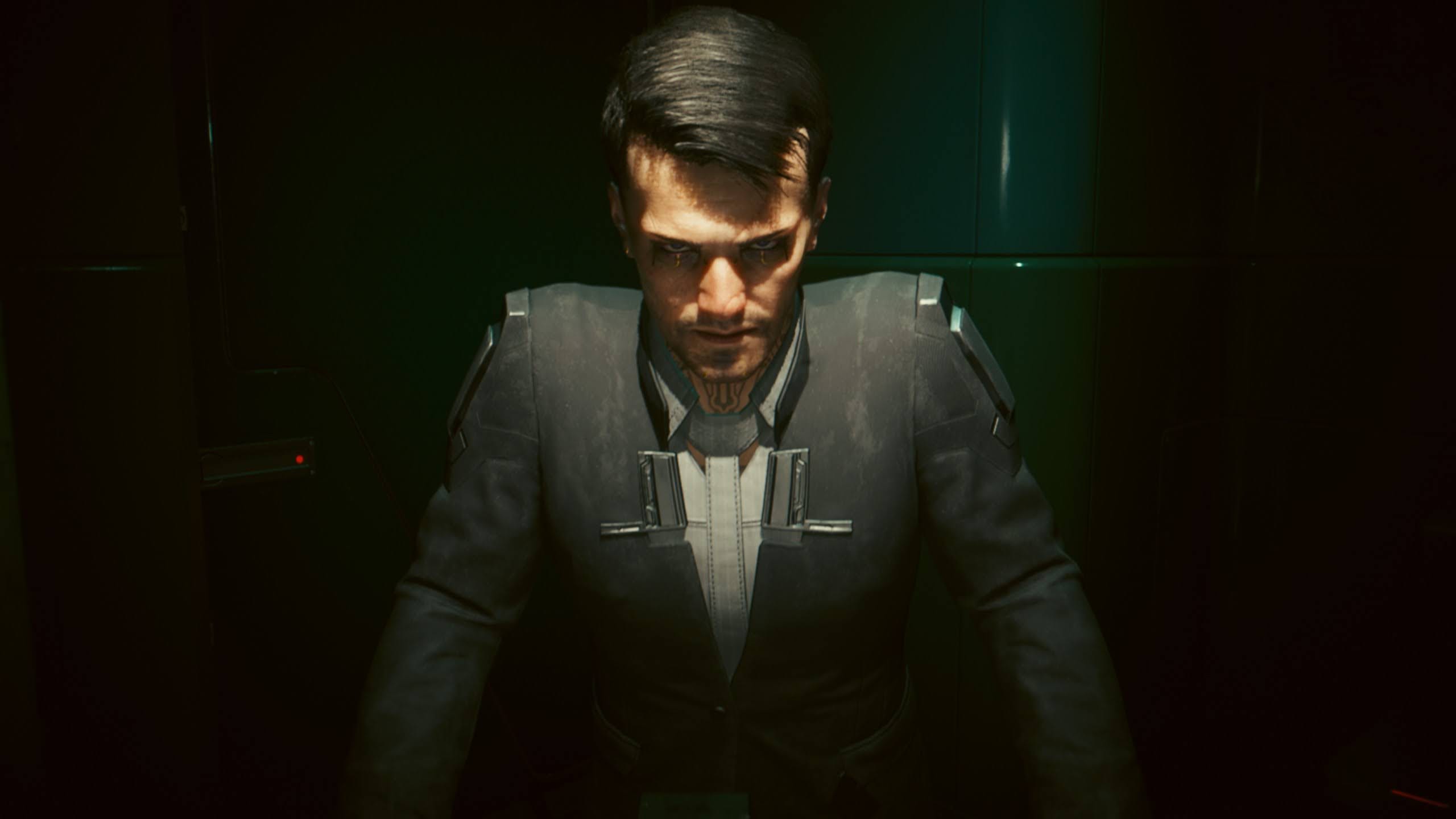
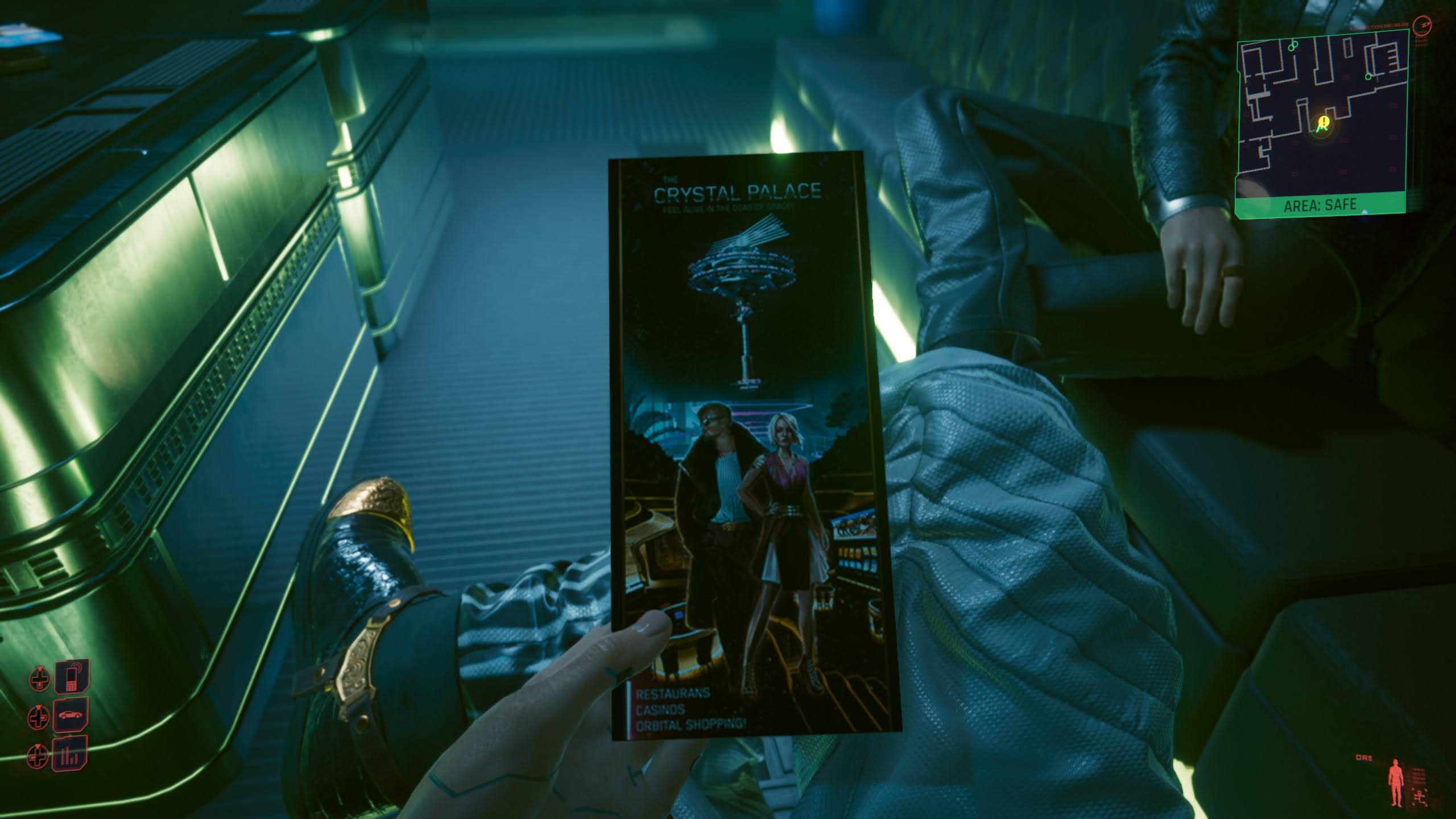
After the final mission, I found myself in that sterile, clinical medical facility in orbit. The tests, the isolation, the coldness of the Arasaka staff—it was crushing. I realized that in my desperate attempt to “live my own life,” I had walked right into the dirty hands of the corporations. I became the very thing Johnny Silverhand had been fighting against. I thought I was being pragmatic, but I was actually selling out—and in this universe, selling out is a fate worse than death. 
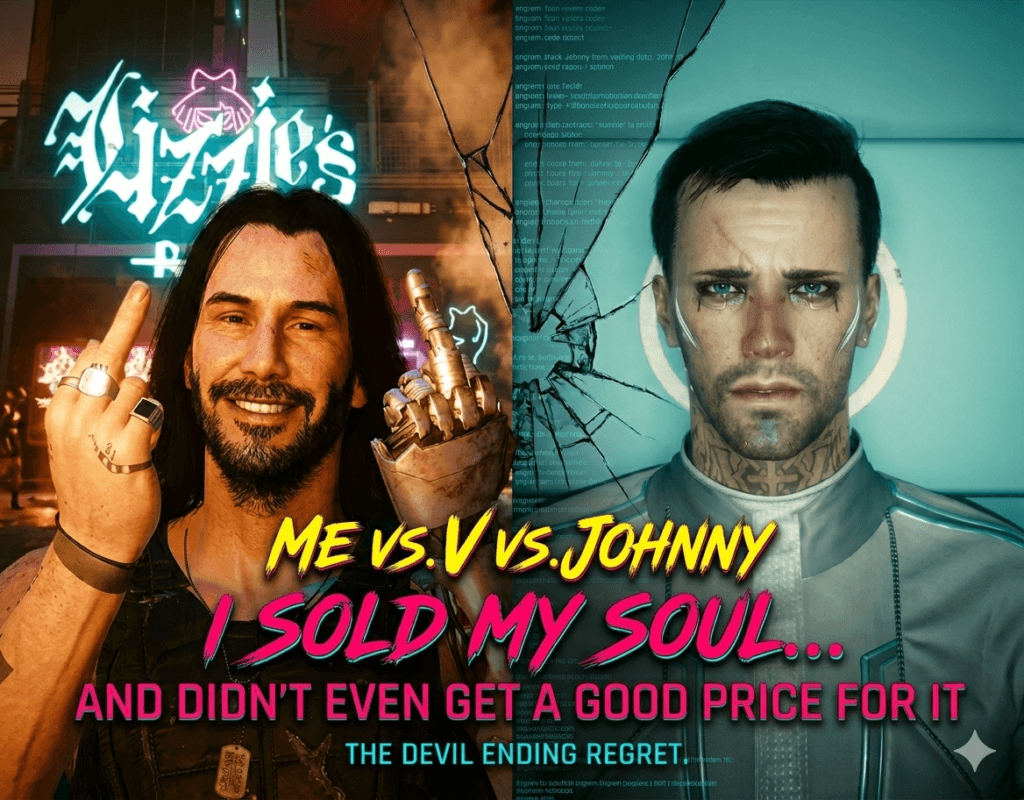
Then the credits rolled, and the video messages started coming through. Hearing someone say, “You’re up with all the rich and famous people now…” was nauseating. I wasn’t a legend; I was a digital file in a corporate database. I felt like I betrayed Johnny. I started the game wary of him—“can I really trust him?”—but by the end, he was the only one being honest. He didn’t want to save my body; he wanted to save my will. By choosing Arasaka, I kept my body but lost my soul.

VI. Conclusion: Engram or End Game

I originally started my journey as a Corpo, so in a way, this ending was a true reflection of the path I began on. It was hollow. It was sterile. And it was a mistake.

You often have to walk the entire length of the wrong road just to realize exactly why you should have turned back at the start. I had to see the cold reality of that space station to realize that Johnny’s chaotic rebellion had more humanity in it than anything the corporations offered. I lied to myself about what we were fighting for.

Usually, I’m a “one and done” type of player. But for the first time, I genuinely feel I need to go back. I need to fix the mistake I made. I owe it to Johnny—and to the version of V that didn’t give up—to find an ending that doesn’t involve sitting in a golden cage. As Johnny once said:

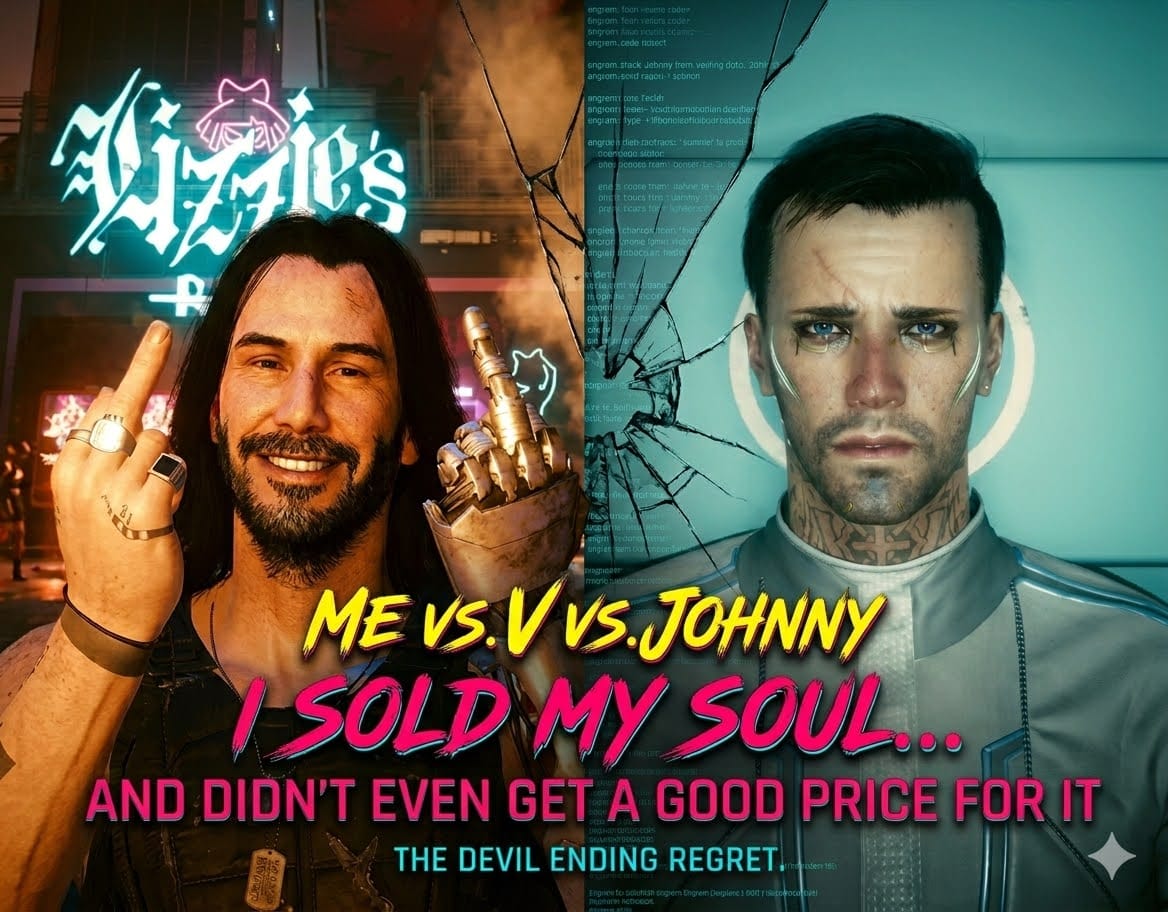
“You sold your soul, V… And the worst part is, you didn’t even get a good price for it.”

Night City won this round, but I’m not done with it yet…

VII. Epilogue

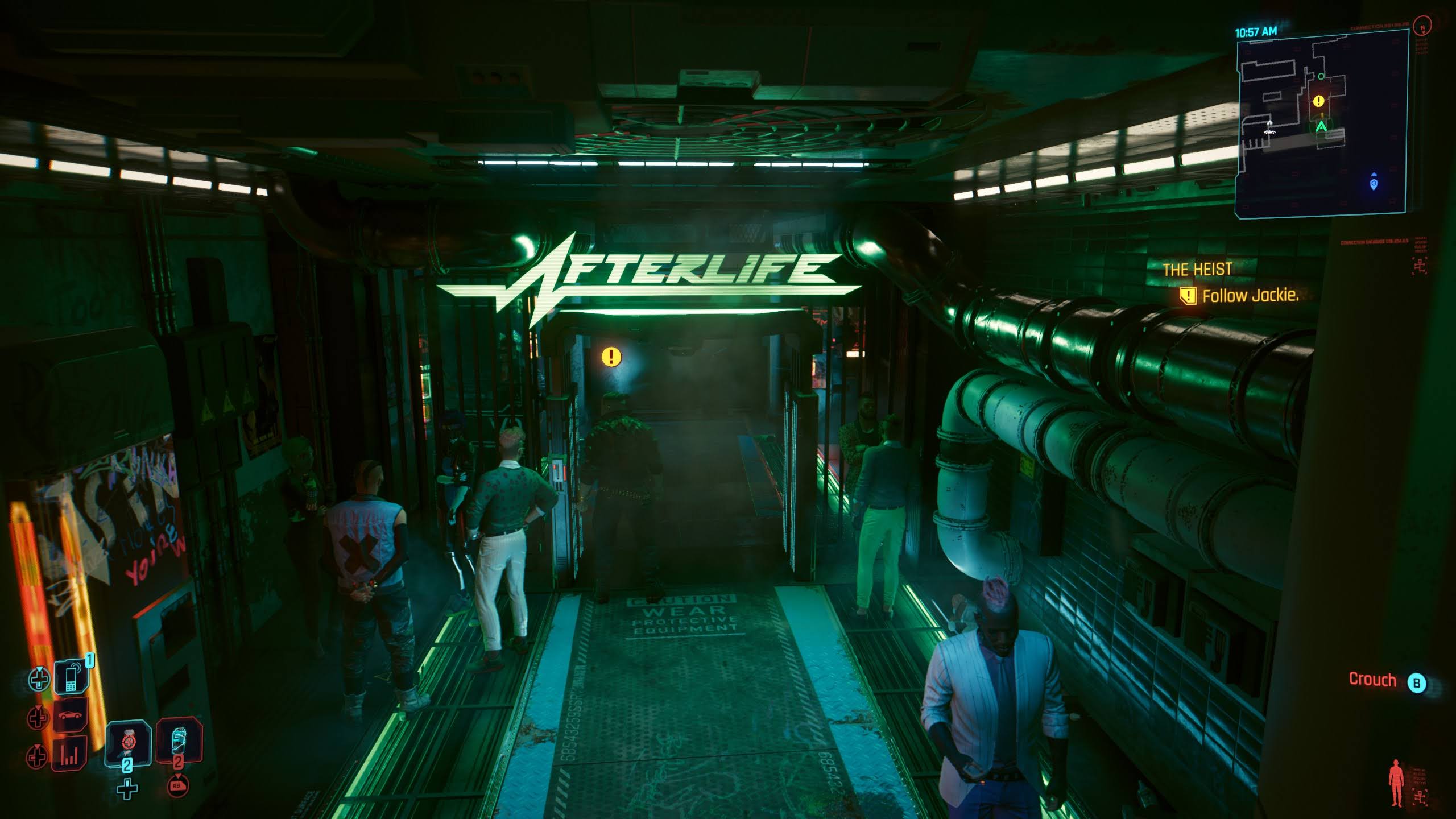
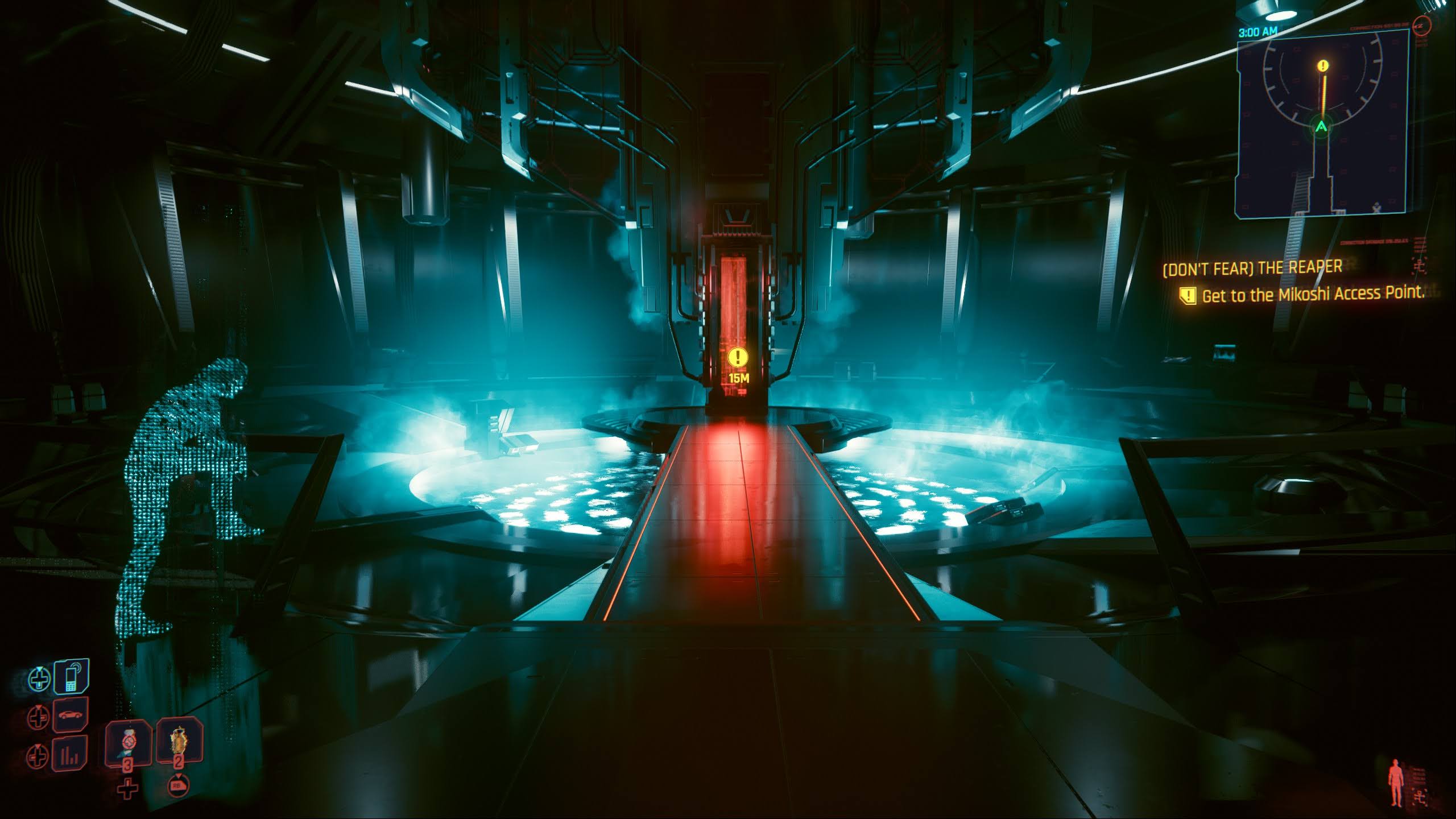
fter much reflection, I went back… but this time with my best choomba, Johnny Silverhand. (Don’t Fear) The Reaper is supposed to be difficult, but with new-found purpose and trust in my partner, I knew it was the right choice. It was pure preem carnage—no collateral, no backups, just two ghosts showing the suits that some assets can’t be liquidated. I traded a permanent, sterile seat in Mikoshi/Secure You Soul fortress for the throne at the Afterlife. My legend isn’t defined by a corporate contract, but by the mark I leave on the world through the choices I make.

“It’s not about how you live, V. It’s about how you die. And what you leave behind.”


Crash Dash - Watching the AI Bubble Pop

Strategic Surveillance of Overextended Assets

Live Market Heat & Daily Summary

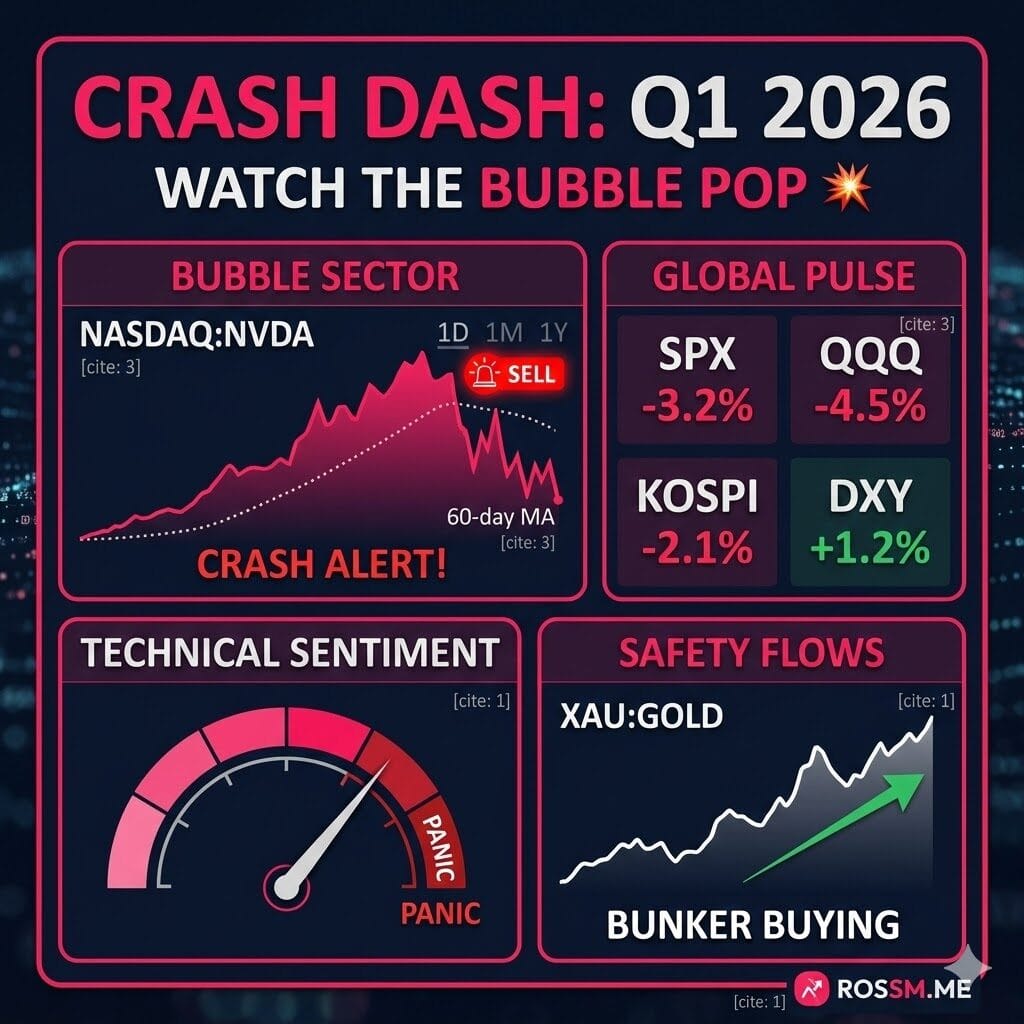
Note: We are tracking the correlation between the US AI giants and their South Korean hardware suppliers. If the memory-chip leaders (Samsung/SK Hynix) lead a downturn, the US software bubble is likely next.

AI Bubble Companies

Key Companies: NVIDIA (NASDAQ:NVDA), Microsoft (NASDAQ:MSFT), TSMC (NYSE:TSM), Samsung (FRA:XSDG), SK Hynix (FRA:HY9H), AMD (NASDAQ:AMD), Micron (NASDAQ:MU), Alphabet (NASDAQ:GOOGL), Meta (NASDAQ:META), Apple (NASDAQ:AAPL), Oracle (NYSE:ORCL), Palantir (NASDAQ:PLTR).

Why we follow: These companies have had ridiculous growth over the last 2 years and account for the majority of AI technologies.

Crash Indicator: If we see a continued sharp downturn in price over 3-10 days with large volumes of people cashing out.

Global Infrastructure (Indexes)

Key Targets: NASDAQ 100 (NASDAQ:QQQ), S&P 500 (AMEX:SPY), ASX 200 (AMEX:EWA), MSCI South Korea (AMEX:EWY), FTSE 100 (BATS:EWU), Nikkei 225 (AMEX:EWJ).

Why we follow: Tracks broader institutional health across multiple jurisdictions to identify systemic risk.

Crash Indicator: If we see a continued sharp downturn in price over 3-10 days with large volumes of people cashing out.

Hedges & Currencies

Key Targets: Gold (TVC:GOLD), Silver (TVC:SILVER), Bitcoin (BINANCE:BTCUSDT), USD-EUR (FX_IDC:USDEUR), USD-AUD (FX_IDC:USDAUD), USD TWI (CAPITALCOM:DXY).

Why we follow: Gold/Silver are the bunker; FX tracks larger FX risk across multiple countries and which countries are looking weaker.

Crash Indicator: Rapid flight from risk assets into metals, or a sudden spike in the USD TWI (DXY) indicating a global dollar squeeze.

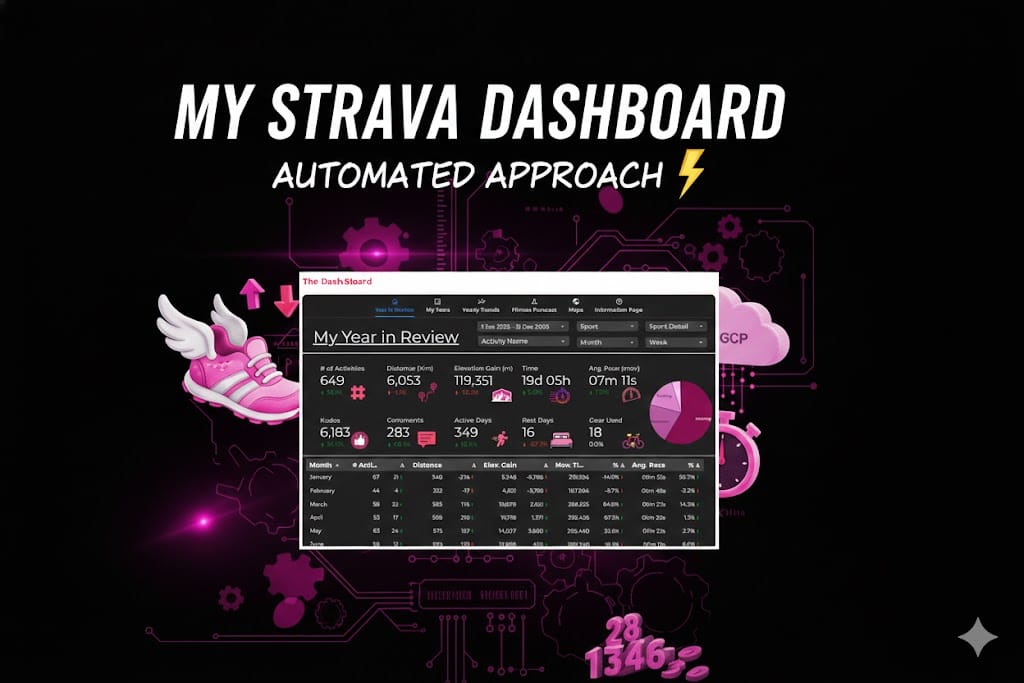
My Strava Dashboard: An Automated Approach

TLDR: “I automated my Strava data so I can spend less time looking at my laptop and more time getting lost on trails. Check out how I built a 100% cloud-automated fitness dashboard.”

We’ve reached that time of year again. My social feed is currently a graveyard of Spotify Wrapped stats and “Year in Review” infographics. Strava’s version is… fine. It tells me I ran a lot and probably spent too much money on gels.

But as a data person, a once-a-year few pages of stats doesn’t cut the mustard. I didn’t want a participation trophy; I wanted a command center. I wanted to see how my 2025 hill repeats compared to 2018, and I wanted it to update while I was out actually doing the miles—not while I was hunched over a keyboard hitting “Run Script.”

The Build: Moving from Manual to "Mach 1"

To get this off the ground (and into the cloud), we built a four-stage pipeline that handles the heavy lifting so I don’t have to. Here is the “Pro” setup:

  1. The Handshake (Strava API): We tapped into the Strava API using OAuth 2.0. This isn’t just a simple download; it involves a system of refresh tokens that allow the dashboard to keep its “all-access pass” to my data without me having to log in every morning.
  2. The Brain (Python & Pandas): I (with the help of my trusty assistant, Gemini) wrote a Python script that acts as a digital filter. It pulls over 60 columns of raw data—everything from heart rate to polyline map coordinates—and transforms them. We’re talking unit conversions (meters to km), date-granularity breakdowns, and custom “Efficiency Ratios” (Moving Time vs. Elapsed Time).
  3. The Warehouse (Google Sheets): Instead of a complex SQL database, we used Google Sheets as a lightweight data warehouse. It’s accessible, easy to audit, and plays perfectly with our visualization layer.
  4. The Automation (Google Cloud Functions & Scheduler): This is the secret sauce. The script lives in a Google Cloud Function (a serverless “worker”). I set up a Cloud Scheduler (essentially a digital alarm clock) to trigger that function every morning at 8:00 AM.

The result? I go for a run, the cloud wakes up, fetches the data, processes the map, updates the spreadsheet, and the dashboard is ready before I’ve even finished my post-run coffee.

The Evolution: From Sumo to Strava

If you saw my previous post on the Sumo Data Master dashboard, you know I love a good trendline. But that project was like a manual transmission—it only worked when I sat down at my local PC and ran the code.

The Strava Dashboard is a different beast. It’s fully “Set and Forget.” While the Sumo project taught me how to analyze data, this project taught me how to engineer it. We moved from a local script to a live, cloud-native application.

Why Bother? (The 100-Mile Motivation)

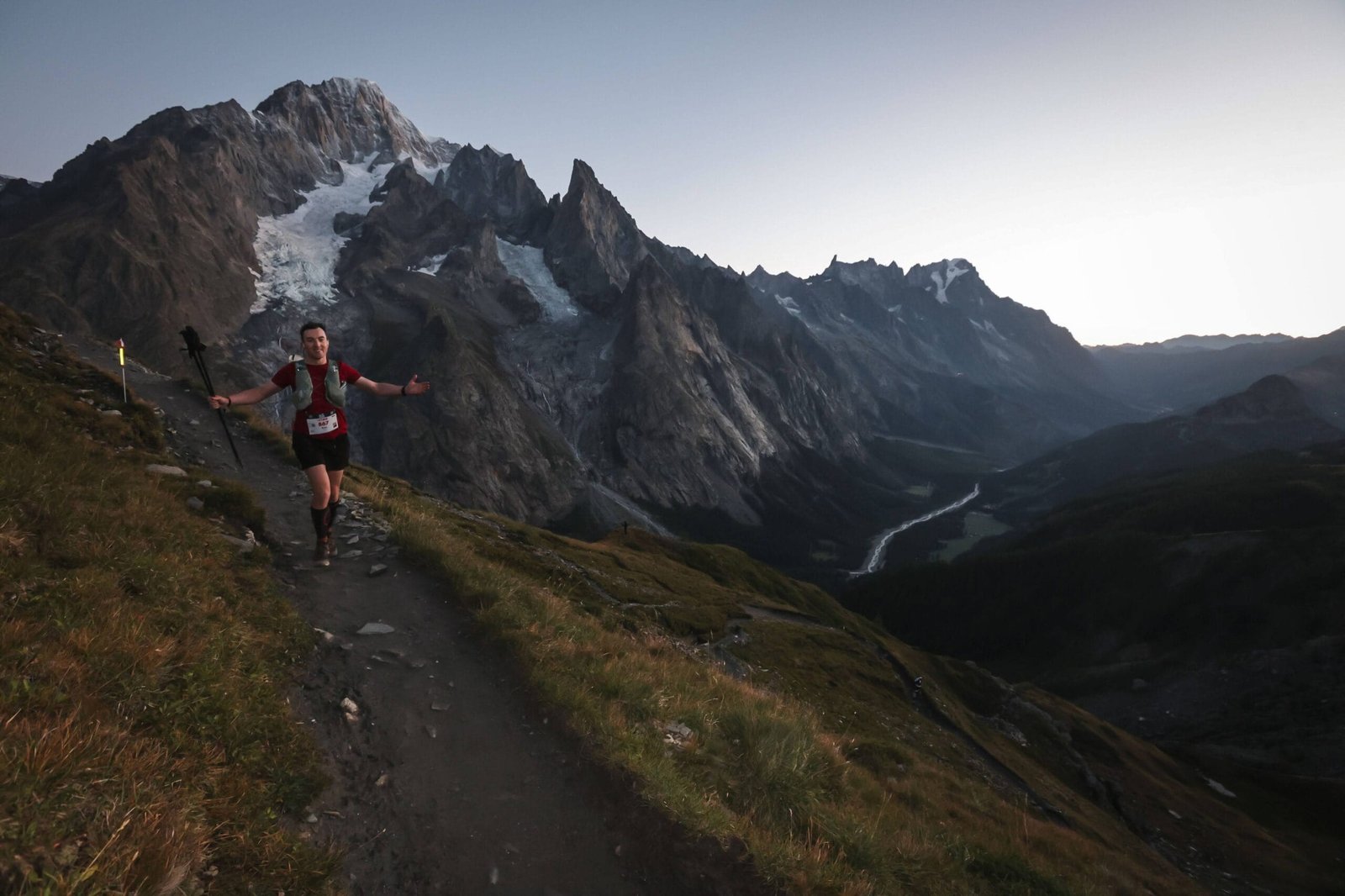
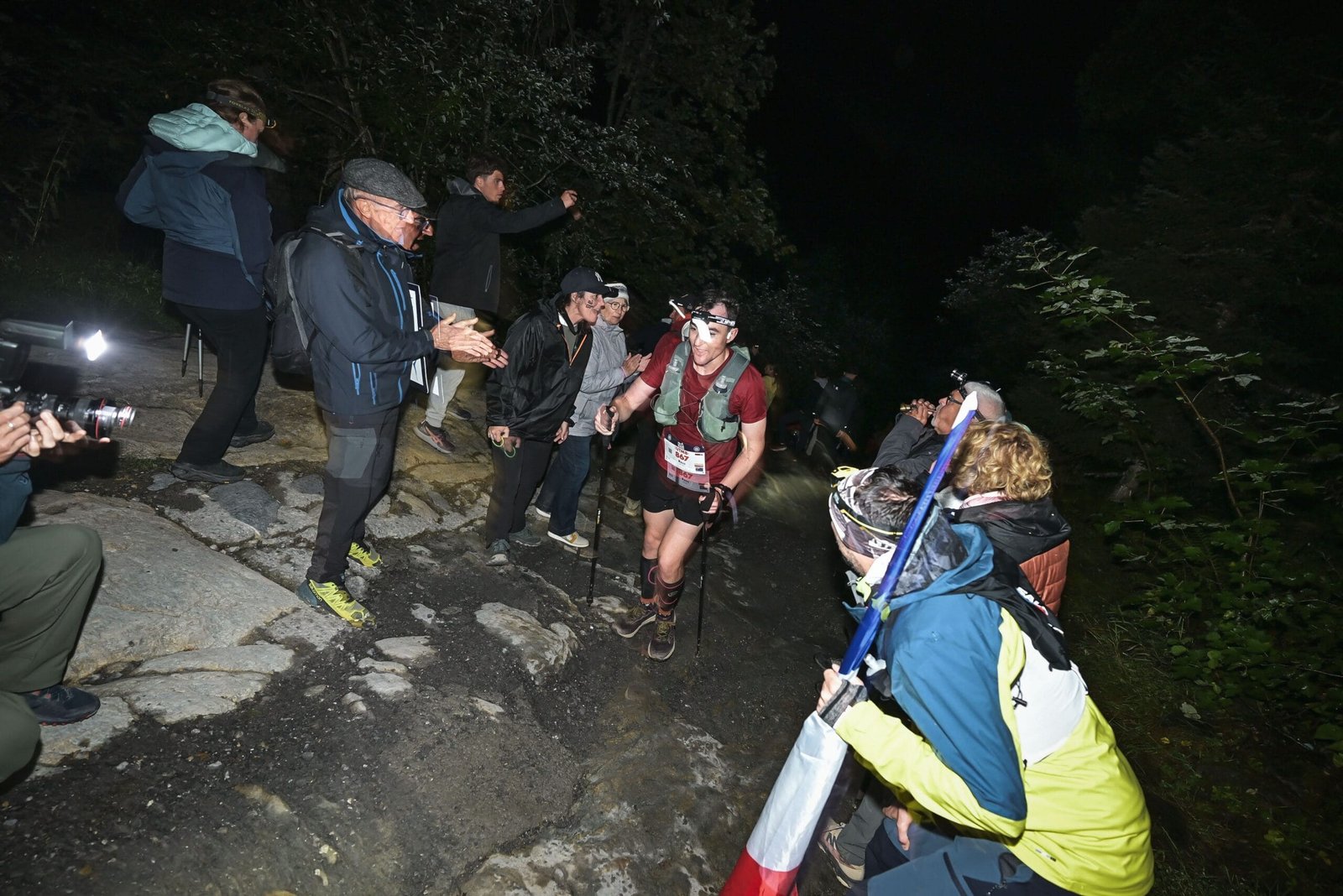
You might ask: “Ross, isn’t this overkill for a morning jog?” Maybe… But I have my sights set on the UTMB 100-miler this year and praying to the lottery gods that I get in. When you’re training for 100 miles, “vibes” aren’t a training plan. I need to track my cumulative elevation gain over years, know what works for me and be mountain-ready before hitting the start line.

It was also fun and a challenge to see if I could get it working with full automation.

Sumo Stables: Managing a Fantasy Sumo Team

In my previous posts [Sumo Stats 1] & [Sumo Stats 2], I shared how I used AI to build a dashboard and why I wanted to dive deeper into Sumo statistics before our trip to Fukuoka. But data is only half the fun. The real goal was to create Sumo Stables—our own version of Fantasy Sumo.

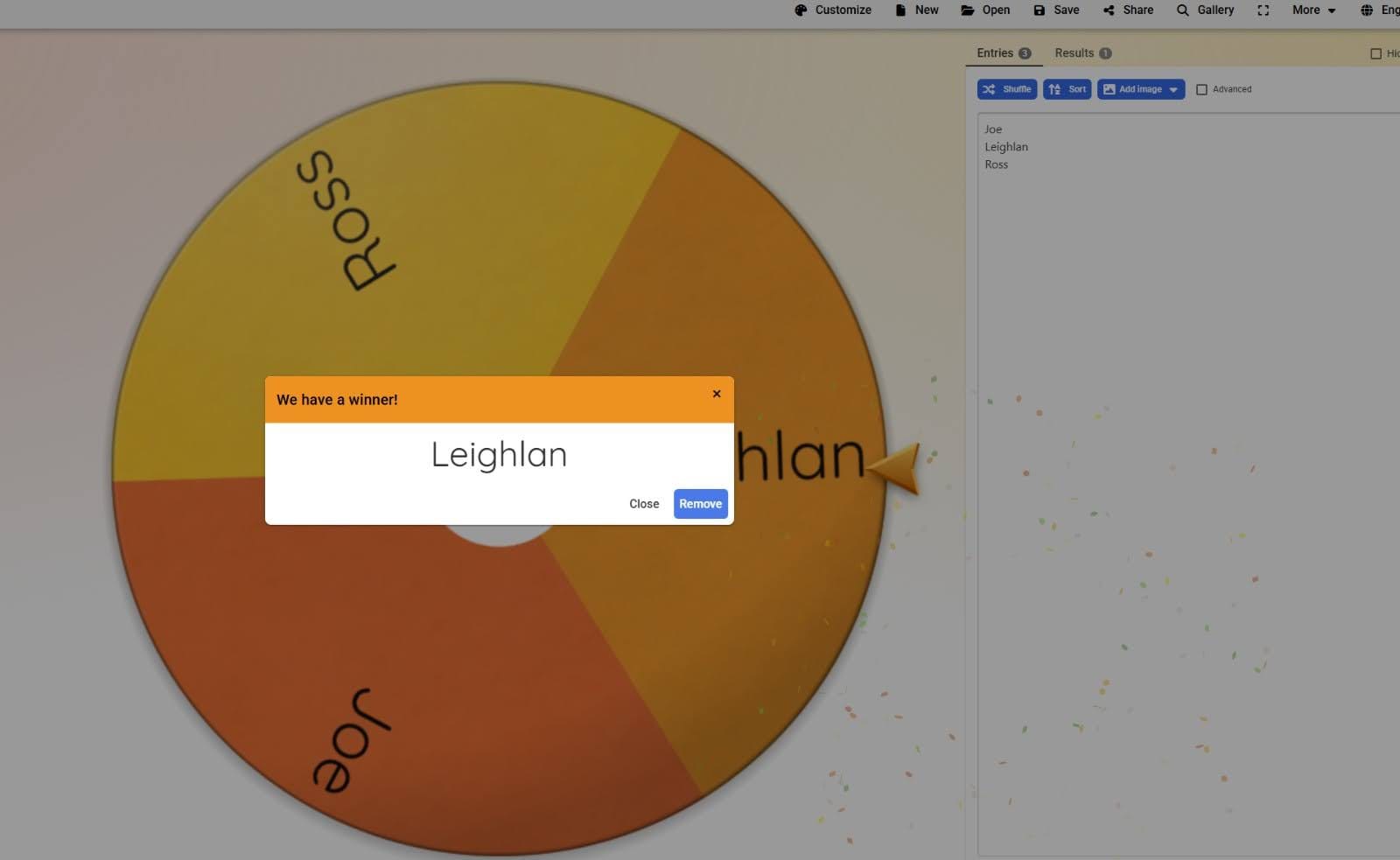
If you’ve played Fantasy Football, you know the drill: you draft a team, track their performance, and pray for no injuries. But Sumo brings its own unique flavor. In our league, we aren’t just fans; we are Oyakata (親方 – Stablemasters) managing a portfolio of six rikishi (力士 – wrestlers). We generally use a name selector [wheelofnames] and the order will be 1,2,3,3,2,1,1,2,3,3,2,1,etc.

The Draft: Building Your Stable and Choosing your Captain

Every tournament, the stables reset. Each player drafts a team of six rikishi, split evenly to reflect the traditional Banzuke (番付 – official ranking):

  • 3 East (東 – Higashi) Rikishi
  • 3 West (西 – Nishi) Rikishi
Similar to the real Banzuke:

Once the picking is finished, you must nominate one Captain. There is a strategic catch: your Captain must be a Maegashira (前頭 – the rank-and-file wrestlers). You cannot choose a top-tier champion (like an Ozeki or Yokozuna) to lead; you have to find the value in the mid-ranks.


How to Win: The Two-Fold Point Scoring System

Unlike traditional fantasy sports where you just aggregate points at the end, Sumo Stables is about consistency and daily performance. We use a layered scoring system.


1. Match Scoring

Each day, your rikishi enter the ring. A win by a regular stable member earns 1 point. However, your Captain is your “power player”—a win from them earns 2 points. All losses count as 0.


2. Day Points

At the end of each day, we compare our match scores. The player with the most wins for that day earns Bonus Day Points that add to their tournament total:

  • 1st Place: 3 Points
  • Tied 1st Place: 2 Points
  • 2nd Place: 1 Point
  • Tied 2nd Place: 1 Point
  • 3rd Place: 0 Points
 
3. Barnstorming (Handicapped)

A Barnstorm (全勝 – Zenshō) is when all six of your rikishi win their matches on a single day. To prevent the leader from running away with the tournament, this bonus is handicapped based on your current ranking:

  • If you are in 3rd place: +3 Points
  • If you are in 2nd place: +2 Points
  • If you are in 1st place: +1 Point

Note: If two rikishi from your own stable are scheduled to fight each other, that match is excluded from the Barnstorm calculation.


4. Tournament Bonuses

On the final day (Day 15), extra Bonus Day Points are awarded to stables holding the top achievers:

  • Tournament Winner: +3 Points
  • Prize Winner (Technique, Fighting Spirit, etc.): +1 Point
  • Kinboshi (金星 – A Maegashira defeating a Yokozuna): +1 Point
  • Winning Record (Kachi-koshi) per rikishi: +1 Point


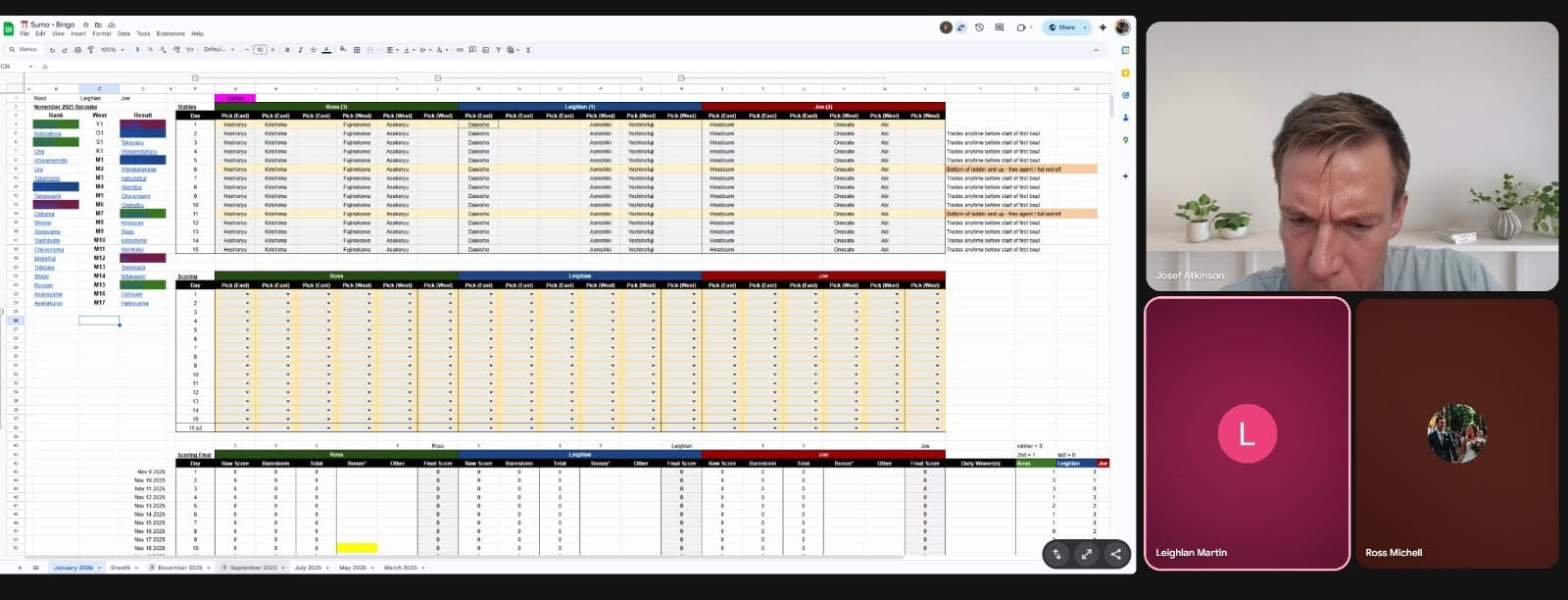
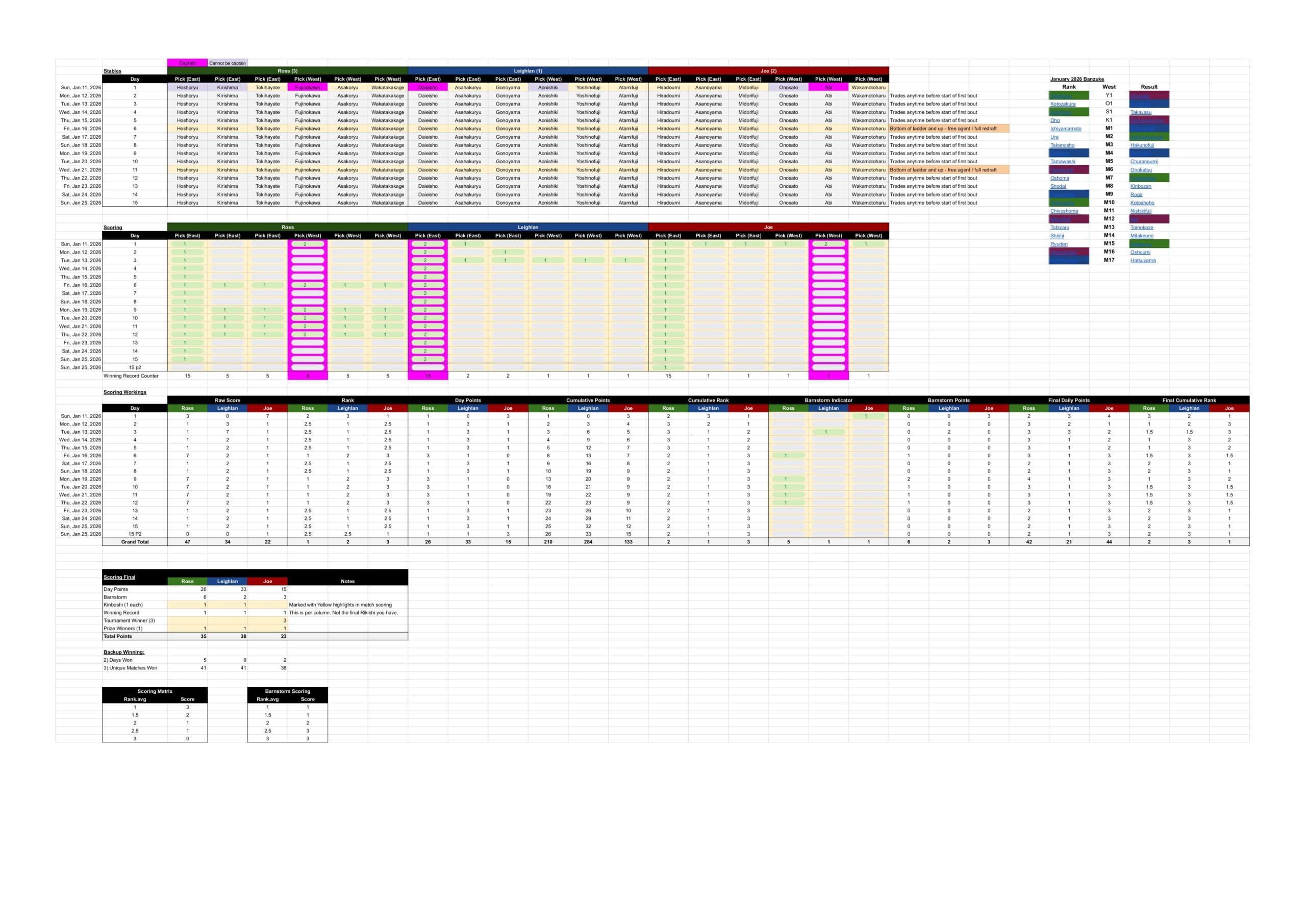
Jan 2026 - Sumo Stable Google Sheet

Trading: The High-Stakes Marketplace

Trading can occur regardless of whether a rikishi is injured. Our league allows for two types of movement:

  1. Free Agent Trades: On Day 6 and Day 11, players can drop a wrestler and pick up any “Free Agent” (a rikishi not currently in any other player’s stable). This is also the only time you can change your Captain.
  2. Player-to-Player Trades: You can negotiate trades between stables at any time before the start of a day’s bouts.
 

Replacements: Handling Kyūjō (休場)

Sumo is a physical sport, and injuries—or Kyūjō (休場 – absence)—happen. If your rikishi is injured, the rules are automatic:

  • You take the loss for that day (unless it is a fusenshō victory).
  • You then automatically take on the “Replacement Rikishi” (usually the highest-ranked wrestler in the division below, such as Juryo #1).
  • Once you have the replacement, you can trade them for a Free Agent on any day following the injury.
 

Part 2: The Fukuoka Forecast; Using Data for Stable Strategy

With the Sumo Stats dashboard in hand, our draft wasn’t just about picking names we recognized—it was about portfolio management. The data allowed us to spot the “Back-end Bandits” (rikishi who dominate the final week) versus those who start strong but burn out quickly. This insight is crucial for our trade windows on Days 6 and 11; if a wrestler’s performance trend is dipping, we swap them for a fresh Free Agent.

Another strategic layer was managing “In-fighting.” Because matches between your own stable members don’t count toward a Barnstorm bonus, we used the dashboard to ensure a varied draft. By picking rikishi across different rank clusters, we minimized the chances of our own team knocking each other out of bonus contention, ensuring maximum consistency across the 15 days.


Part 3: Showdown in Fukuoka; Who Won?

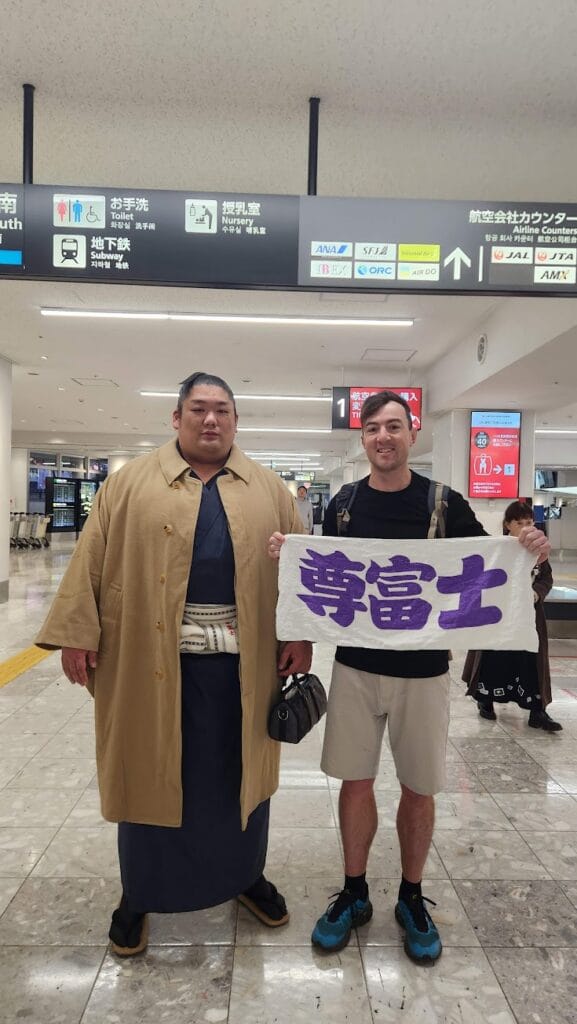
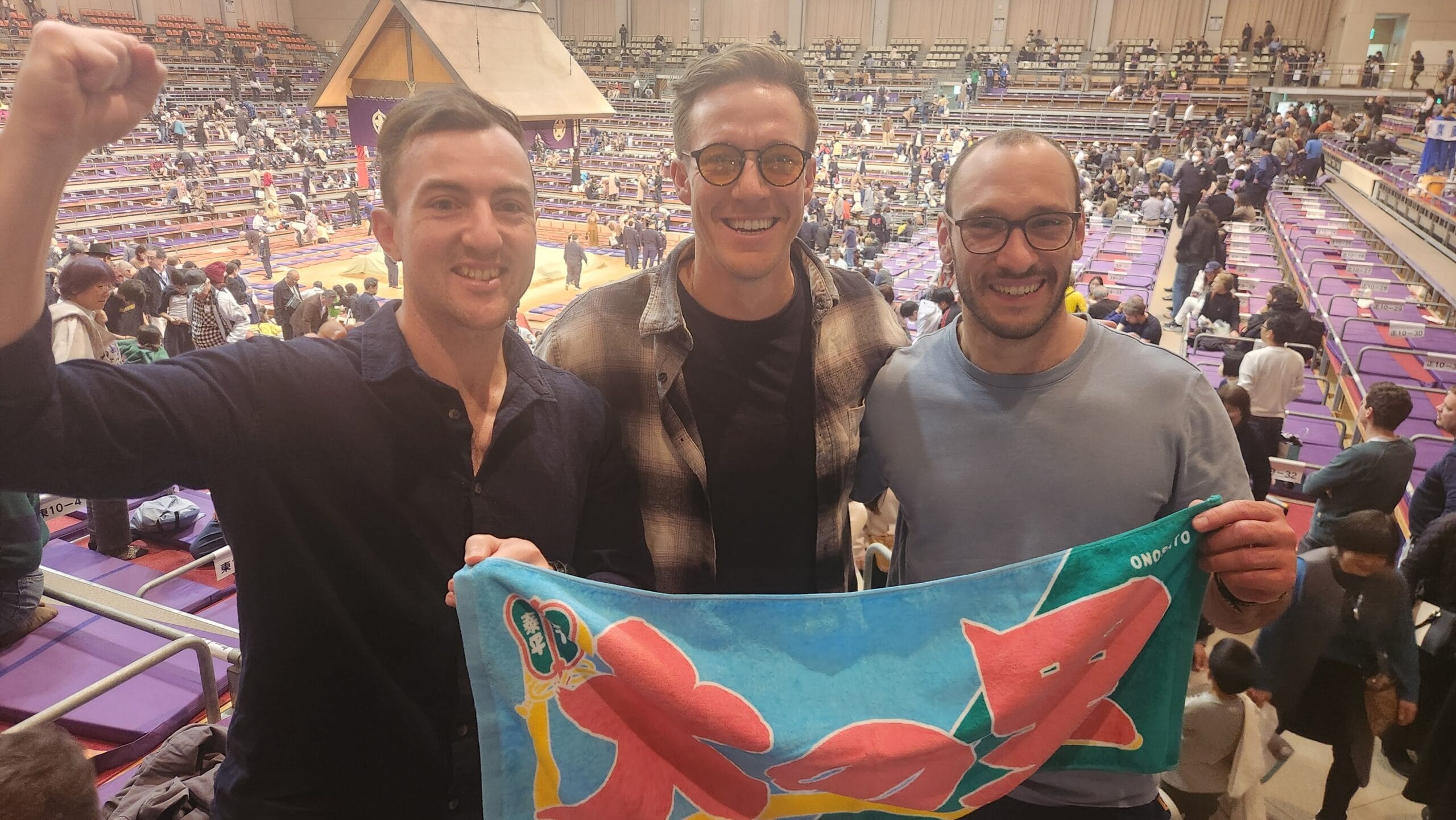
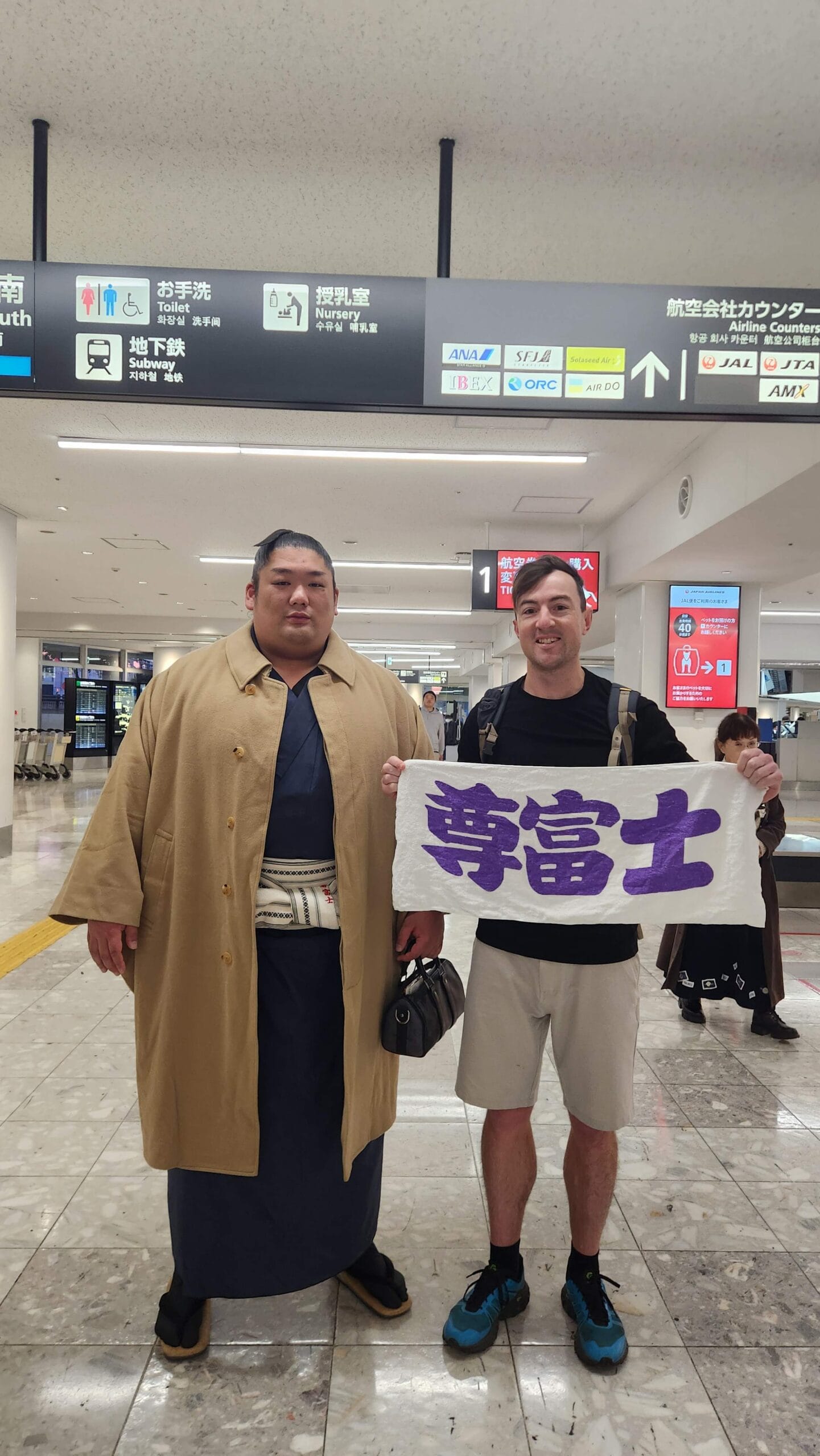
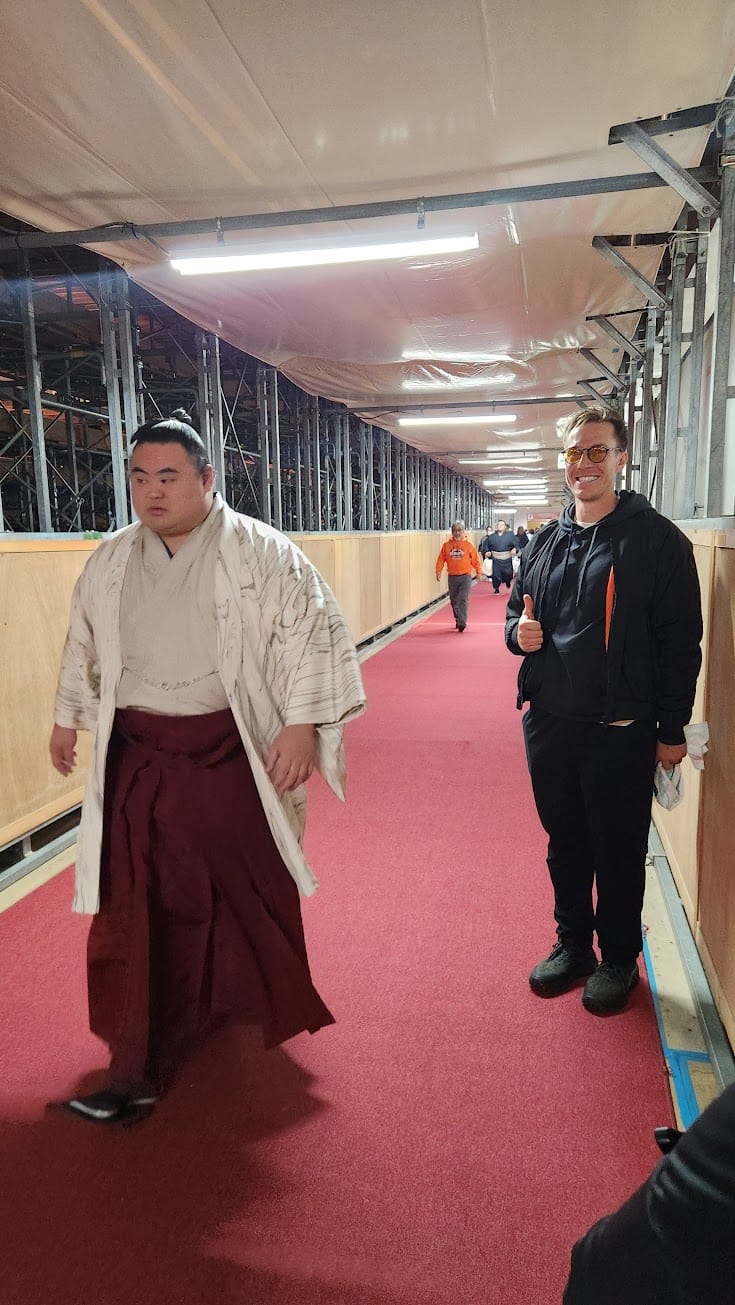
The competition wasn’t just digital. We headed to Fukuoka to witness the action live, managing to secure tickets for Days 6 and 7. There is nothing like the atmosphere of a live Basho, and we even managed to snag some shots with the “big dogs” like Takerufuji.


In the end, the inaugural Sumo Stables title came down to a nail-biting final day between Leighlan and me. Leighlan had been the model of consistency, racking up Day Points throughout the tournament. On the final Sunday, Aonishiki and Yoshinofuji secured me a mountain of bonuses, bringing the score within a hair’s breadth. But alas, no Chanpon (the celebratory feast) for me this time—Leighlan held on for the win.

Poor Joe, on the other hand, picked such a disastrous draft that he became the inspiration for our new Handicap Barnstorm rule. We realized that if someone falls as far behind as Joe did, they need a serious “catch-up” mechanic to keep the group chat interesting!


Conclusion: Refined in the Ring

Since this was our first official Sumo Stables match, we were essentially building the plane while flying it, making several rule changes on the fly. However, the experiment was a massive success. The combination of Python-driven data, a custom Google Sheets engine, and the raw energy of the Fukuoka tournament transformed us from casual observers into obsessed Oyakata (even the tour guide didn’t have the knowledge we had!). We’ll be back for the next tournament—sharper, data-richer, and ready for the draft.

Huge spoilers ahead….
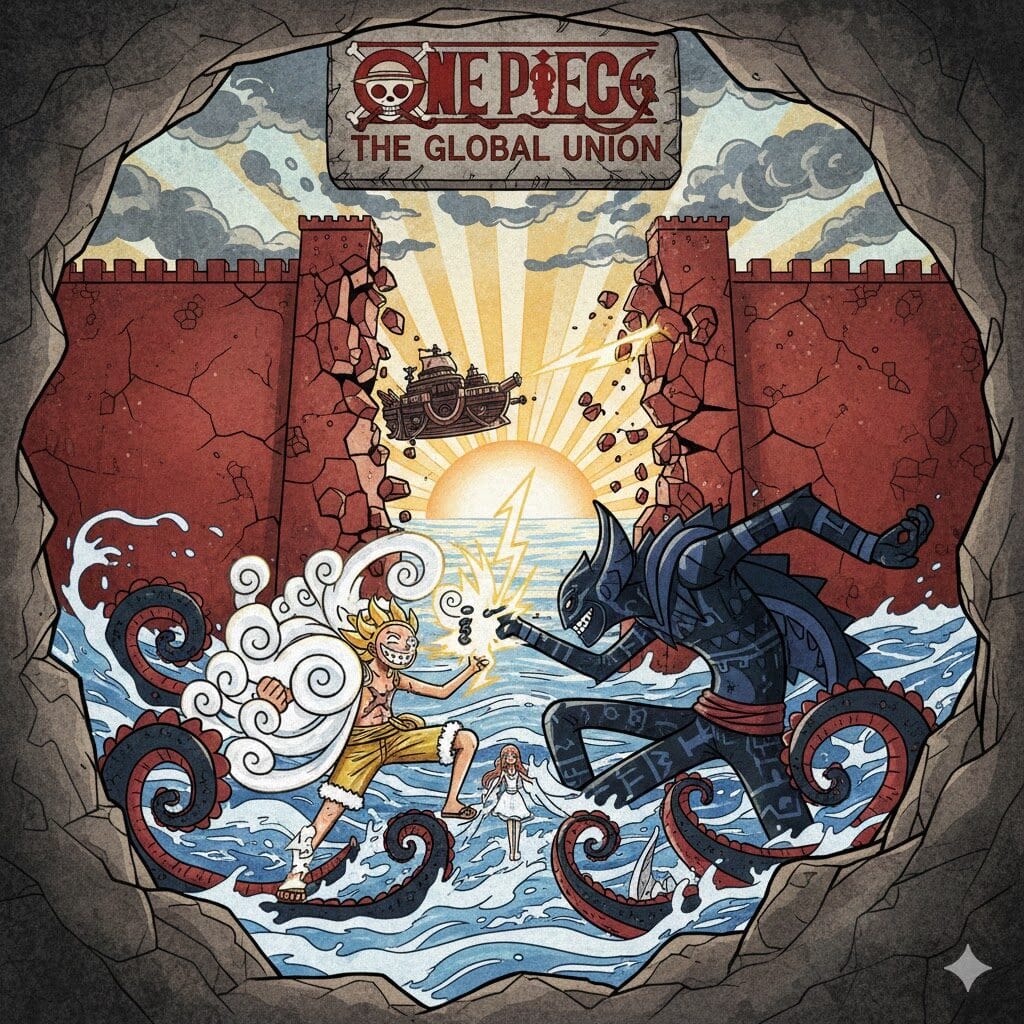
One Piece Solved – The Final Theory: Global Union

👑 One Piece Solved – The Final Theory: Global Union

The final answer is not gold, nor treasure, but a ‘planetary reset manual’. The Elbaf Mural confirmed the war; this theory explains the mechanism of the world's rebirth.

For 800 years, the World Government has perpetrated the greatest crime in history. The One Piece is the knowledge needed to undo that crime and complete Joy Boy's promise. For 25+ years, I have been watching One Piece and only now have things started making sense for me to share with you.


I. The Solution: The "One Piece" World

The "One Piece" is not a treasure chest. It is a single, singular entity achieved by combining three elements, restoring the world to its original state:

  • Unity of the Seas (The All Blue): The destruction of the Red Line merges all four seas and the Grand Line into a single, contiguous ocean, fulfilling Sanji’s dream.
  • Unity of the Land & Peoples: The removal of the massive, artificial barriers makes all lands accessible and functionally connected, ending the isolation that breeds slavery and discrimination. This allows the Fish-Men to rise to the surface.
  • The Knowledge: The blueprints and prophecy left by Joy Boy on Laugh Tale explaining how to achieve this geographical revolution.
Concept art showing the All Blue vision.

II. The History: Sun Gods, Sea Gods, and the Clan of Dreamers

The foundation of the World Government lies in the Void Century (900–800 years ago)—an elemental war between two opposed ideals:

The Ancient Kingdom (The Will of D.)The 20 Kings (The Celestial Dragons)
Figurehead: Sun God Nika (Joy Boy), symbol of freedom and imagination.Figurehead: Imu (Umi), the hidden ruler, an anagram for the Japanese word for "Sea."
Ideology: Liberty, shared knowledge, and dreams. The "D" Clan were the Dreamers who willed the first Devil Fruits into existence.Ideology: Control, slavery, and stagnation. Imu represents the Sea’s wrath—the element that hates Devil Fruits and strips users of their freedom.

The Betrayal and the Savior

The 20 Kings were rulers of independent nations. When they formed the World Government:

  • 19 Kings abandoned their people and moved to Mary Geoise. The Nefertari D. Family was the only one to refuse.
  • Queen Nefertari D. Lily chose her people over godhood and is the true hero who scattered the Poneglyphs to preserve the truth for the future.
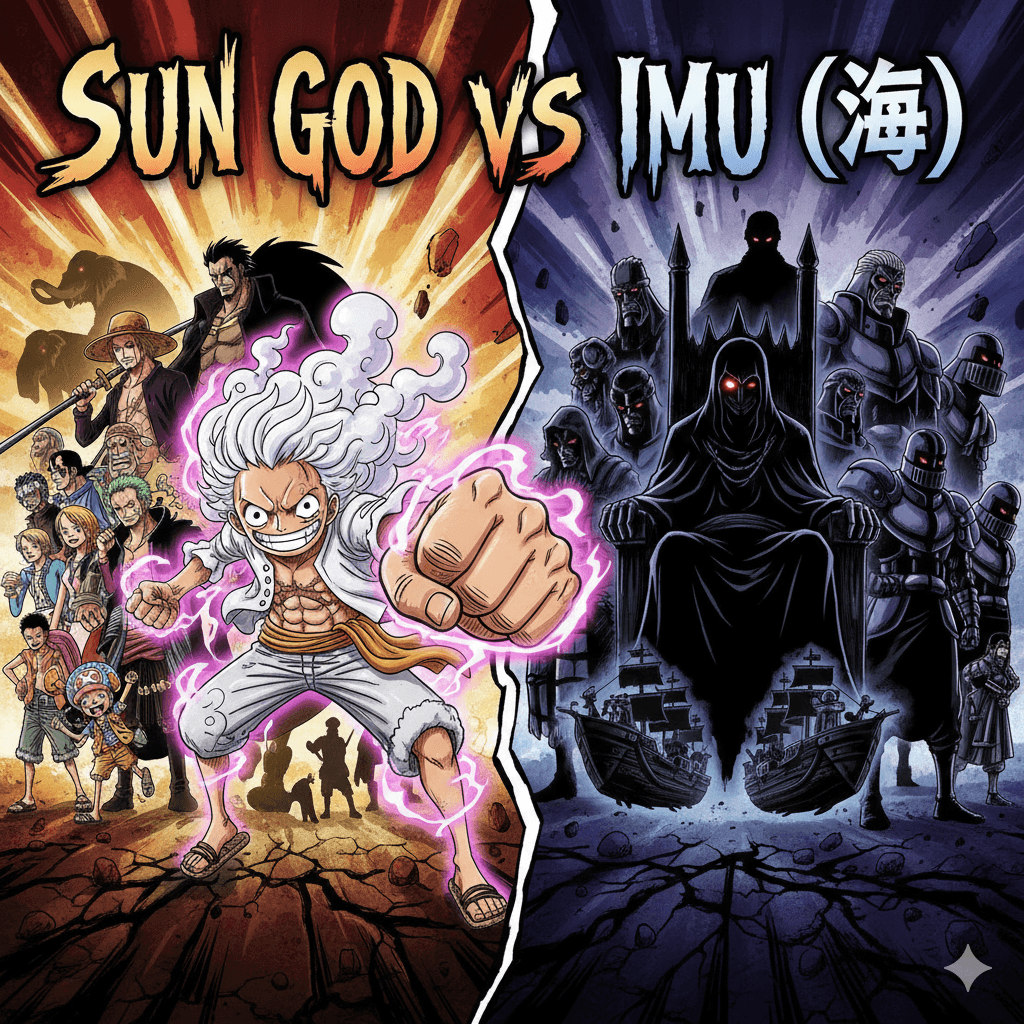
Conceptual art of Luffy versus Imu.

III. The Crime: The Great Division and Imu’s Immortality

The 20 Kings won the war by committing a planetary act of geo-engineering:

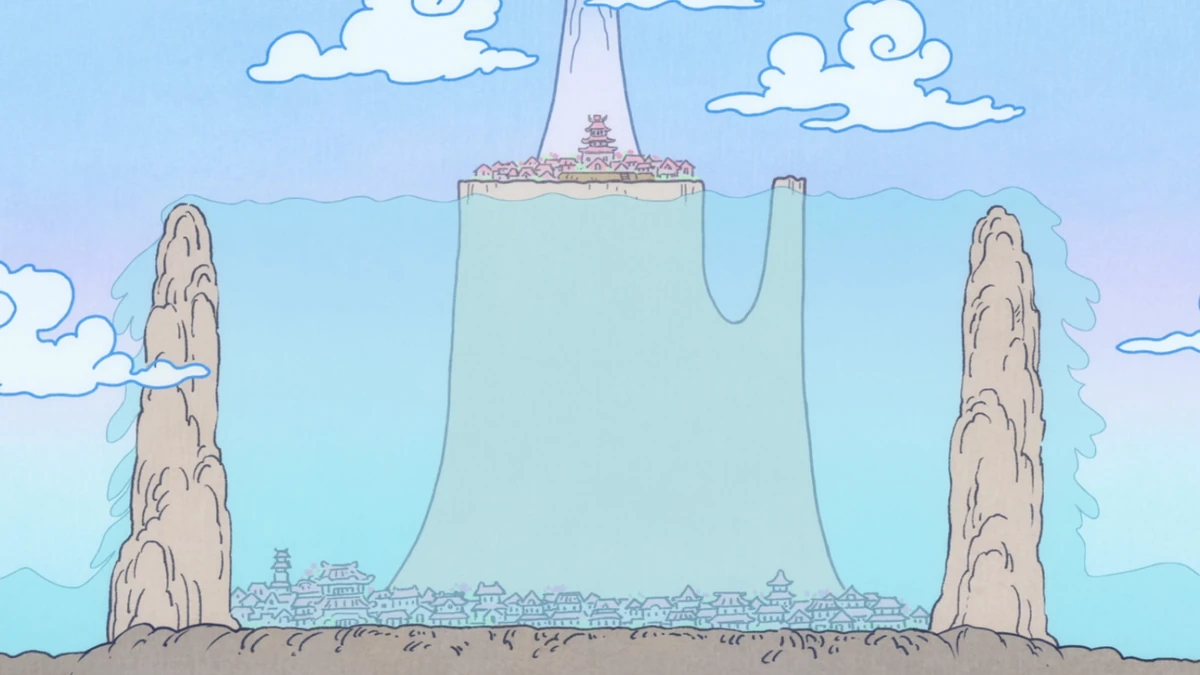
  • The Red Line Construction: They built the massive Red Line, which displaced the global ocean, causing a devastating Global Flood that drowned the Ancient Kingdom (evidenced by the underwater Old Wano).
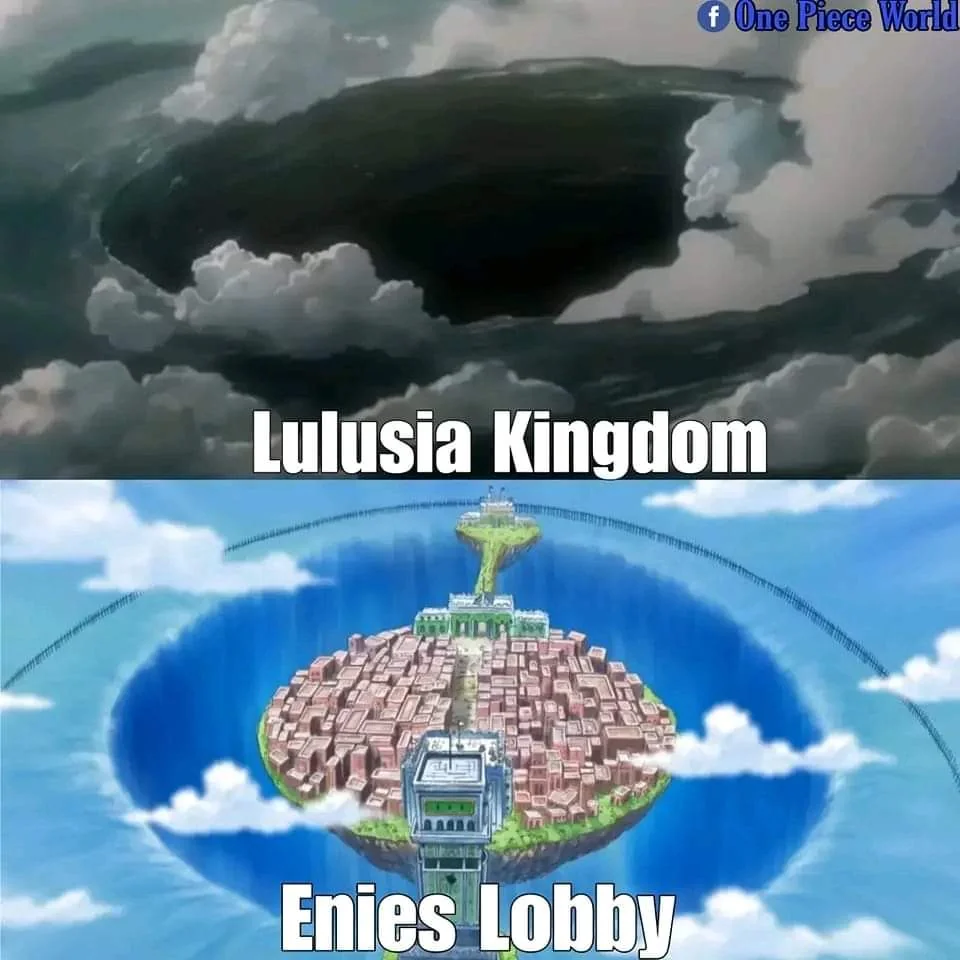
  • The Evidence: The massive hole under Enies Lobby is a scar of the earth-shattering weapons used. Furthermore, the Celestial Dragons wear scuba gear/spacesuits—visual proof they prepared for the water-world they created.
  • Imu's Eternal Rule: Imu survived by achieving immortality (likely via the Ope Ope no Mi’s Perennial Youth Operation). The Empty Throne is a symbol that no one rules, masking the reality that the same immortal tyrant has ruled for 800 years.
Image showing the current Wano Country on the surface.
Image showing Enies Lobby's hole and a destructive force reference.

IV. The Bridge: Gol D. Roger and the Call to Arms

Roger found the One Piece, the truth of the Void Century, and the necessary plan, but he couldn't execute it:

  • The Timing: Roger was terminally ill and discovered the "Two Sovereigns" prophecy. He was 20 years too early because the new Poseidon (Shirahoshi) had not yet been born.
  • The Martyrdom: His public execution was a calculated act to become a martyr and energize the world’s most determined spirits to find the knowledge and finish the plan he couldn't.

V. The Execution: The Trinity of Ancient Weapons

The plan requires a coordinated, planet-altering strike. The One Piece is the knowledge that explains how to activate the necessary Trinity of Weapons:

WeaponDomainFunction in the Final Plan
PlutonLand/EarthThe ultimate warship (Wano). Needed as the destructive force to physically breach and level the Red Line.
PoseidonSea/WaterThe Mermaid Princess (Shirahoshi). Needed to command the Sea Kings to stabilize the massive oceans and rescue people during the cataclysm.
UranusSky/AtmosphereThe weapon of the skies (Likely related to Moon/Fairy Vearth technology). Needed to counter Imu’s power and control the atmosphere and global weather chaos after the Red Line is destroyed.

VI. The Wildcards: The Final Factions

Luffy and Imu are not alone. The final act involves powerful forces vying for the future:

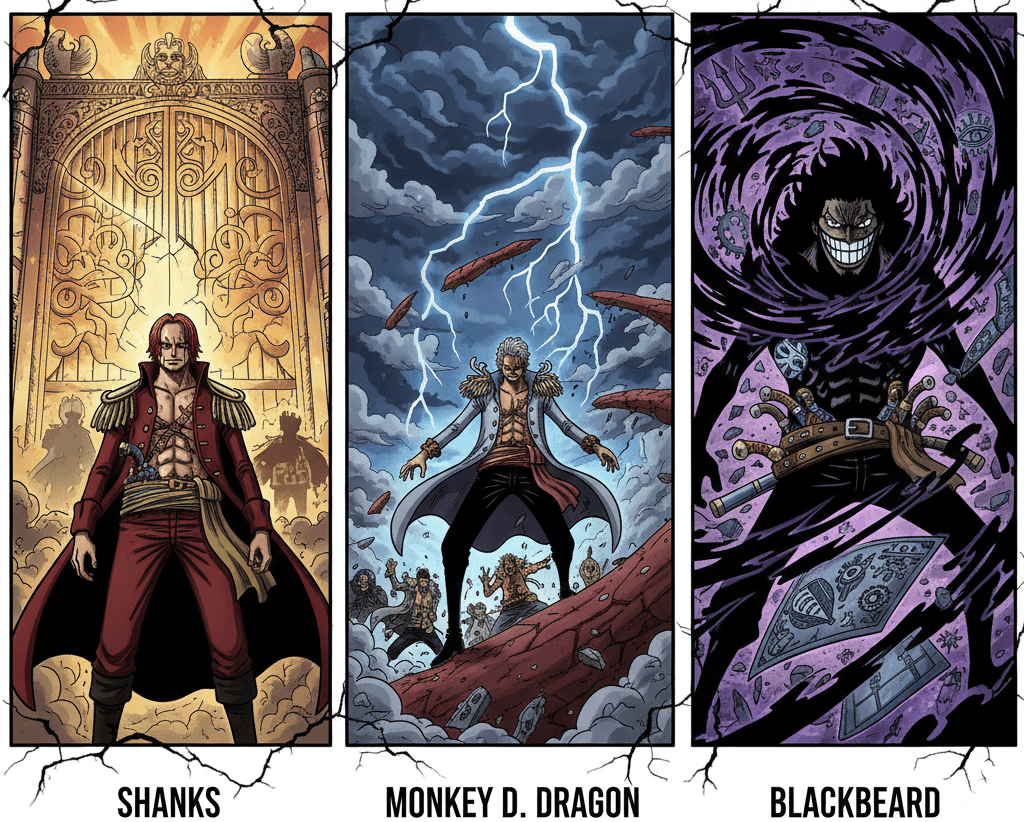
  • Shanks (The Double Agent): By blood, he is a Figarland (Celestial Dragon lineage), but by heart, he carries the Will of D. He is the ultimate Gatekeeper, ensuring the world stayed stable until Nika (Luffy) was ready.
  • Monkey D. Dragon (The Storm): Dragon leads the Revolutionary Army. His role is to initiate the Initial Breach and Diversion on the Red Line to draw out Imu's forces, allowing Luffy’s fleet to execute the main strike.
  • Blackbeard (The Chaos): He represents the Void. While Luffy is the Sun and Imu is the Sea, Blackbeard is the destructive singularity. He is racing for the Ancient Weapons to bring about his own chaotic end.
  • Sun Tree Eve (The Life Support): This colossal tree was likely engineered by Joy Boy's allies to sustain the Fish-Men civilization by channeling light and oxygen 10,000m underwater after the Global Flood. The successful execution of the One Piece plan (dropping sea levels) will make the tree obsolete, leaving it as a monumental symbol of oppression overcome.
Conceptual art of Blackbeard, Shanks, and Dragon.

Conclusion: The Dawn

The evidence is overwhelming. The One Piece is not a battle for gold or treasure, but who can control the planet's destiny.

Roger laughed because he saw the funny story of a man who was 20 years too early but set the perfect stage for his successor.

"Inherited Will, The Flow of Time, and The Dreams of People—as long as people yearn for freedom, these things will never cease!"

Luffy is the embodiment of that yearning. His final adventure isn't about finding the treasure; it's about using it to tear down the repression of the World Government and Nobles System this will then unite the world, Seas, peoples and cultures.


What do you think? Does the scuba gear theory convince you? Let me know in the comments!

One Piece fan art or promotional image.

From Finance Analyst to Sumo Data Master: Building a Sumo Dashboard for the Fukuoka Tournament

TLDR: I’m a finance analyst who knew zero Python, but I used Gemini to write all the code, connect to a public Sumo API, and build a clean, simple data dashboard called Sumo Stats. I made it so my friends and I can analyze unique stats—like how small rikishi beat giants but lose to mid-weights—before our trip to the Fukuoka Grand Tournament!

The Arena of Inspiration: Why I Built a New Sumo Dashboard

As a Finance Analyst, I live in spreadsheets, pivot tables, and dashboards. My world is about taking complex data, finding the patterns, and presenting a clear story. Recently, my interest shifted from quarterly earnings to rikishi (Sumo wrestlers).

This November, my friends and I are heading to Japan to see the final Grand Sumo Tournament (Basho) of 2025 in Fukuoka! We’ve all recently gotten hooked on the sport, and naturally, our group chat exploded with stats and predictions.

I started looking for online dashboards we could use to easily track our favorite wrestlers and make informed predictions. What I found was often overly technical, cluttered, or just not user-friendly.

I didn’t need a complex academic tool; I needed a simple, clean dashboard that anyone in our group could use to see the unique factors—height, weight, and winning techniques—that influence the bouts. I wanted to share something easy for my friends to get excited about, and I wanted to learn to use coding in the process.

AI: The Ultimate Code Shortcut

My biggest obstacle was simple: I had strong analytical skills from my finance background, but no way to actually obtain the historical Sumo data. The solution came when I found a public Sumo API. The data was available; I just needed a way to ask for it. I decided to treat this project as my personal coding crash course, with Gemini as my technical co-founder. I didn’t master Python; I used AI to write the Python. I’d give it the prompt: “Connect to the data source, extract the entire history of bouts, and save it to a CSV file.” My ‘Aha!’ moment came when I successfully ran that first major extraction, seeing thousands of bout records instantly appear in my Google Drive. The barrier was broken, and I knew I could build a simple, powerful tool for the Fukuoka trip!

The Sumo Stats Pipeline: From Raw Data to Live Dashboard

Using my finance background in process design, I structured the data pipeline:

  1. Extraction: Python code (written by Gemini) connects to the Sumo-API and pulls the raw data as a CSV.
  2. Automation: I upload the CSV to Google Drive. Gemini then helped me write an App Script that automatically imports and updates the data into Google Sheets, keeping the dashboard current!
  3. Visualization: I imported the data from Google Sheets into Looker Studio (Google’s dashboard tool), where I applied my analyst skills to design the visual layout—simple, clean, and focused on our key questions.

Sumo Stats is Born! Unique Insights for the Fukuoka Draft

The power of this dashboard lies in the unique insights we can now use to impress (and probably annoy) each other with predictions during the Fukuoka tournament. Plus, these stats will be critical for the Sumo Stable/Draft we’re planning, complete with trades and replacements throughout the tournament!

Here are a couple of my favorite findings so far:

  1. Height and Weight Match-up Dynamics: It’s not a simple case of “heavier is better.” I found that the small rikishi actually perform quite well against the very heaviest opponents, often outmaneuvering them. However, they tend to struggle the most against the medium-weight wrestlers, who seem to possess the perfect balance of mass and agility to counter them. This discovery proves that it’s not just about size; it’s about the match-up dynamics.
  2. The Daily Bout Winning Trend: By analyzing daily win/loss ratios across tournaments, I noticed a fascinating trend: some rikishi are truly “morning fighters” or “closers.” Certain wrestlers do exceptionally well on the early days of a tournament but fade later, while others are slow starters who dominate the final weekend. Tracking these patterns will give us a huge edge in our Stable/Draft picks!

The dashboard also provides deep dives into Kimarite (winning techniques) ratios, allowing us to see which technical moves are the most reliable. We’re going to be the most prepared group heading into Fukuoka!


Your Skills Are Transferable: A Call to Action

I started this project to create a simple tool for a trip with friends, with zero confidence in my coding ability. I finished it with a live, sophisticated dashboard and a newfound appreciation for what I can accomplish with AI assistance.

This journey is proof that:

  1. Your professional skills are powerful, and they are transferable.
  2. AI is an indispensable tool for turning personal ideas into reality.
  3. You can and should use AI to adapt the skills you already have to new challenges!

If I can use my skills in SQL, pivot tables, and financial analysis to build a sophisticated Sumo dashboard, imagine what you can build by applying your expertise to your own passion project. Go find your AI co-pilot, and start building!

Sumo Stats Dashboard

Welcome to the dashboard! This tool is designed to provide a comprehensive and unique perspective on professional Sumo, moving beyond simple win/loss records to analyze the key physical and technical factors that influence match outcomes.

I became interested in Sumo Wrestling recently and always enjoyed looking into the statistics and bouts. I saw some solutions for this online but never one that really was a good fit for purpose. I don’t know any code, but with the help of my good friend Gemini, I was able to build this dashboard. I have applied the skills in dashboarding (although I was unfamiliar with Looker Studio) from my experience as a Financial Analyst to visually represent the data and insights. I hope you enjoy! A full blog post to come on the effort and skills I had to use in creating this dashboard [From Finance Analyst to Sumo Data Master: Building a Sumo Dashboard for the Fukuoka Tournament]

A big thank you to https://www.sumo-api.com/ for providing a way for me to bring this to life.

Native link here: https://lookerstudio.google.com/reporting/22b652fc-0032-4890-b47a-142990181a6c

Full Dashboard