Sumo

Sumo Stables: Managing a Fantasy Sumo Team

In my previous posts [Sumo Stats 1] & [Sumo Stats 2], I shared how I used AI to build a dashboard and why I wanted to dive deeper into Sumo statistics before our trip to Fukuoka. But data is only half the fun. The real goal was to create Sumo Stables—our own version of Fantasy Sumo.

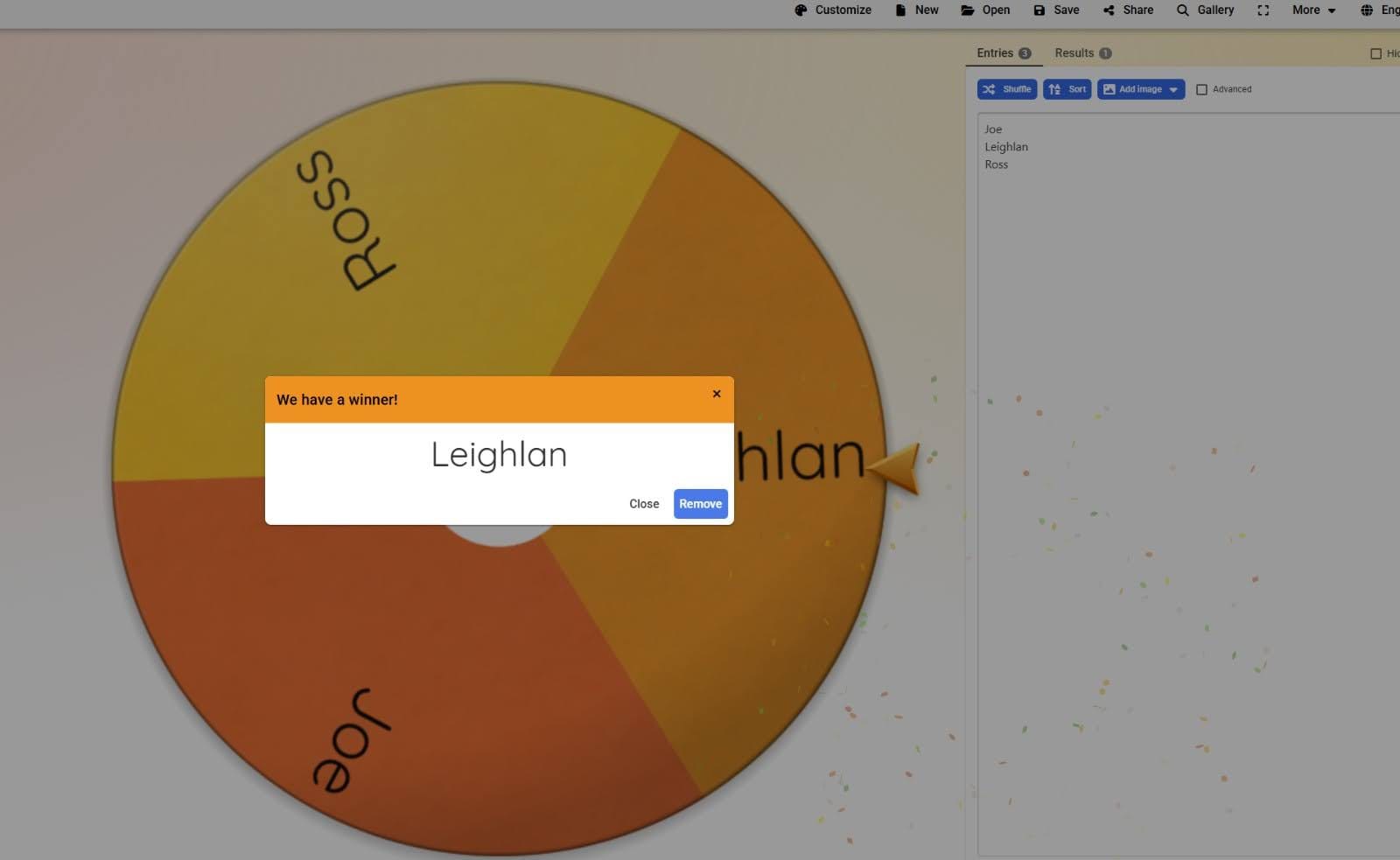
If you’ve played Fantasy Football, you know the drill: you draft a team, track their performance, and pray for no injuries. But Sumo brings its own unique flavor. In our league, we aren’t just fans; we are Oyakata (親方 – Stablemasters) managing a portfolio of six rikishi (力士 – wrestlers). We generally use a name selector [wheelofnames] and the order will be 1,2,3,3,2,1,1,2,3,3,2,1,etc.

The Draft: Building Your Stable and Choosing your Captain

Every tournament, the stables reset. Each player drafts a team of six rikishi, split evenly to reflect the traditional Banzuke (番付 – official ranking):

  • 3 East (東 – Higashi) Rikishi
  • 3 West (西 – Nishi) Rikishi
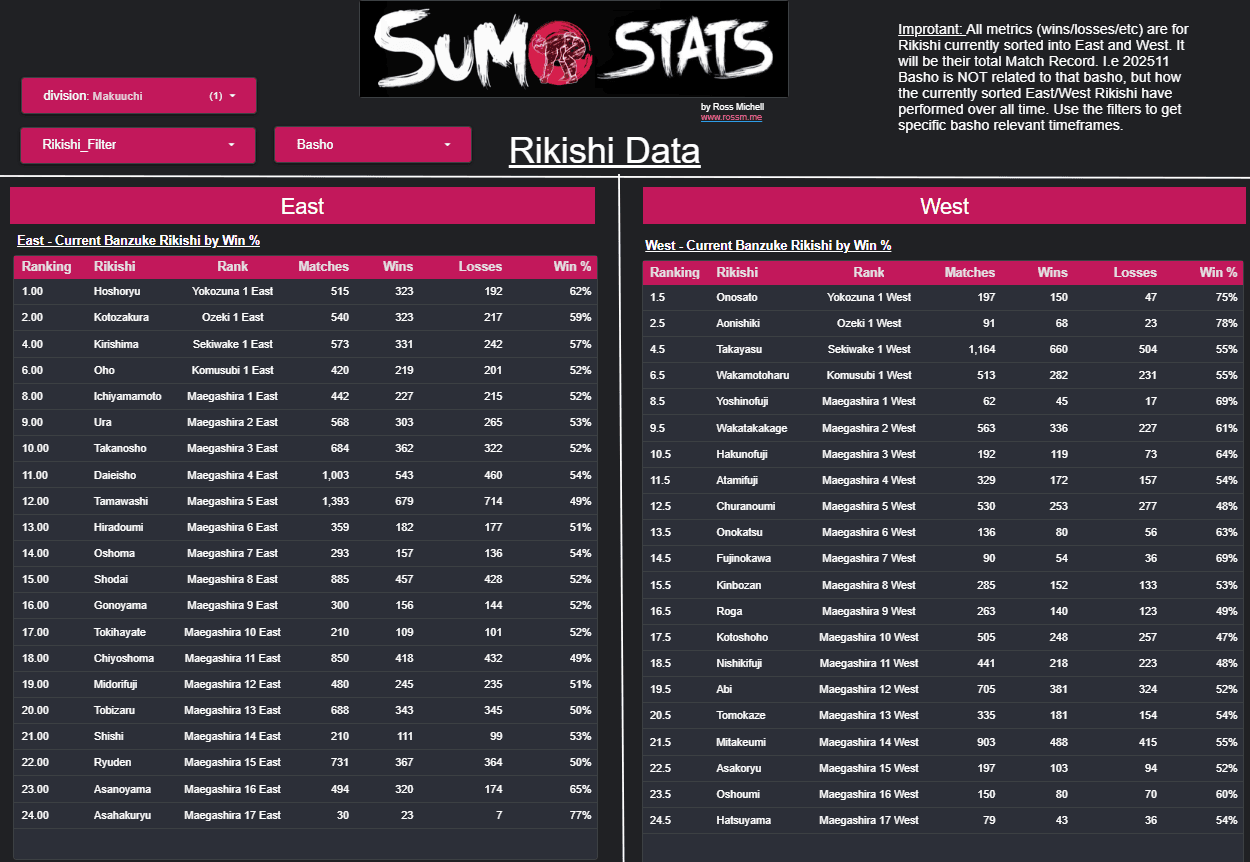
Similar to the real Banzuke:

Once the picking is finished, you must nominate one Captain. There is a strategic catch: your Captain must be a Maegashira (前頭 – the rank-and-file wrestlers). You cannot choose a top-tier champion (like an Ozeki or Yokozuna) to lead; you have to find the value in the mid-ranks.


How to Win: The Two-Fold Point Scoring System

Unlike traditional fantasy sports where you just aggregate points at the end, Sumo Stables is about consistency and daily performance. We use a layered scoring system.


1. Match Scoring

Each day, your rikishi enter the ring. A win by a regular stable member earns 1 point. However, your Captain is your “power player”—a win from them earns 2 points. All losses count as 0.


2. Day Points

At the end of each day, we compare our match scores. The player with the most wins for that day earns Bonus Day Points that add to their tournament total:

  • 1st Place: 3 Points
  • Tied 1st Place: 2 Points
  • 2nd Place: 1 Point
  • Tied 2nd Place: 1 Point
  • 3rd Place: 0 Points
 
3. Barnstorming (Handicapped)

A Barnstorm (全勝 – Zenshō) is when all six of your rikishi win their matches on a single day. To prevent the leader from running away with the tournament, this bonus is handicapped based on your current ranking:

  • If you are in 3rd place: +3 Points
  • If you are in 2nd place: +2 Points
  • If you are in 1st place: +1 Point

Note: If two rikishi from your own stable are scheduled to fight each other, that match is excluded from the Barnstorm calculation.


4. Tournament Bonuses

On the final day (Day 15), extra Bonus Day Points are awarded to stables holding the top achievers:

  • Tournament Winner: +3 Points
  • Prize Winner (Technique, Fighting Spirit, etc.): +1 Point
  • Kinboshi (金星 – A Maegashira defeating a Yokozuna): +1 Point
  • Winning Record (Kachi-koshi) per rikishi: +1 Point


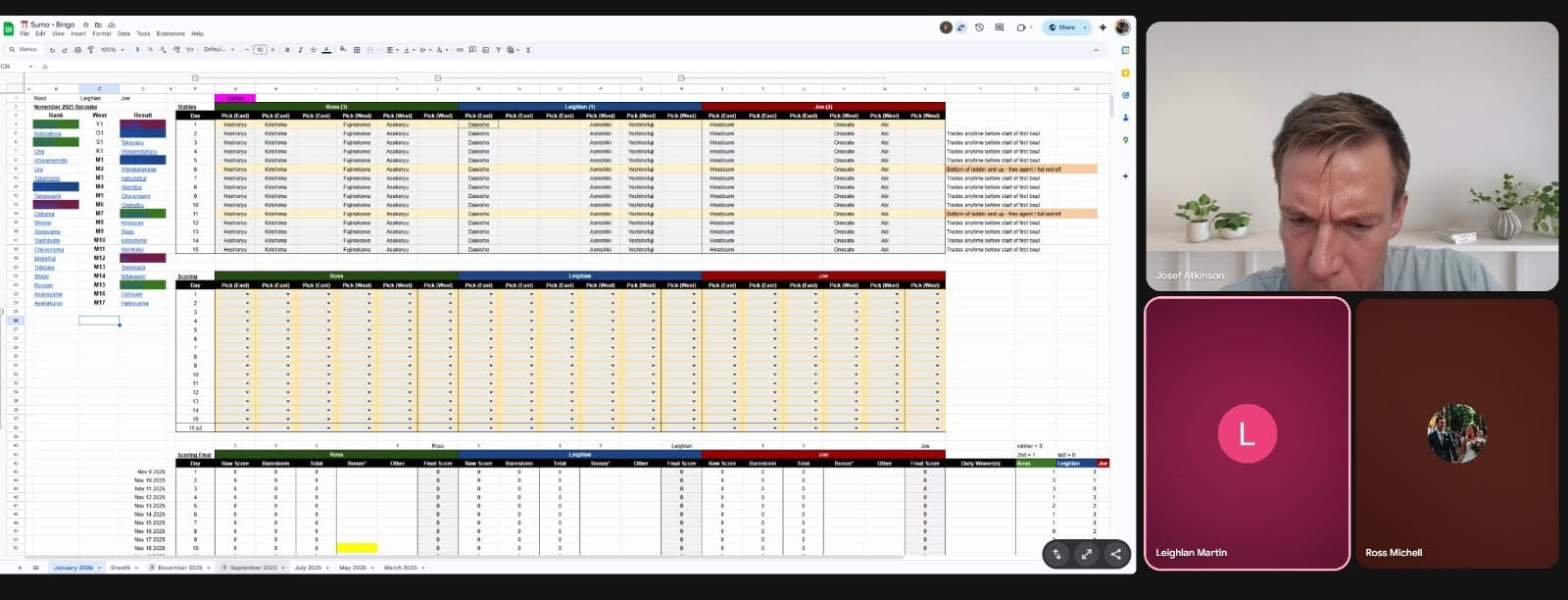
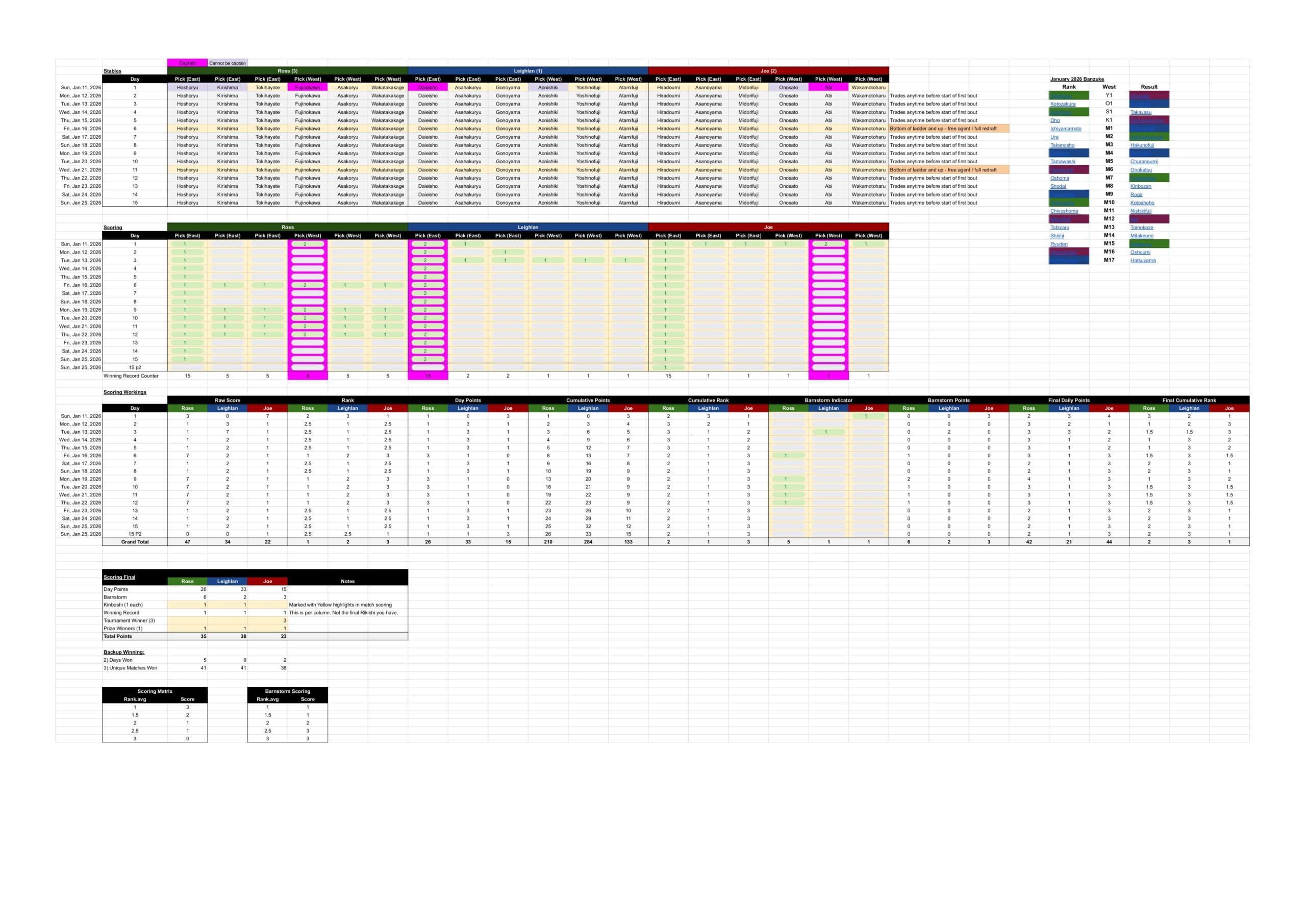
Jan 2026 - Sumo Stable Google Sheet

Trading: The High-Stakes Marketplace

Trading can occur regardless of whether a rikishi is injured. Our league allows for two types of movement:

  1. Free Agent Trades: On Day 6 and Day 11, players can drop a wrestler and pick up any “Free Agent” (a rikishi not currently in any other player’s stable). This is also the only time you can change your Captain.
  2. Player-to-Player Trades: You can negotiate trades between stables at any time before the start of a day’s bouts.
 

Replacements: Handling Kyūjō (休場)

Sumo is a physical sport, and injuries—or Kyūjō (休場 – absence)—happen. If your rikishi is injured, the rules are automatic:

  • You take the loss for that day (unless it is a fusenshō victory).
  • You then automatically take on the “Replacement Rikishi” (usually the highest-ranked wrestler in the division below, such as Juryo #1).
  • Once you have the replacement, you can trade them for a Free Agent on any day following the injury.
 

Part 2: The Fukuoka Forecast; Using Data for Stable Strategy

With the Sumo Stats dashboard in hand, our draft wasn’t just about picking names we recognized—it was about portfolio management. The data allowed us to spot the “Back-end Bandits” (rikishi who dominate the final week) versus those who start strong but burn out quickly. This insight is crucial for our trade windows on Days 6 and 11; if a wrestler’s performance trend is dipping, we swap them for a fresh Free Agent.

Another strategic layer was managing “In-fighting.” Because matches between your own stable members don’t count toward a Barnstorm bonus, we used the dashboard to ensure a varied draft. By picking rikishi across different rank clusters, we minimized the chances of our own team knocking each other out of bonus contention, ensuring maximum consistency across the 15 days.


Part 3: Showdown in Fukuoka; Who Won?

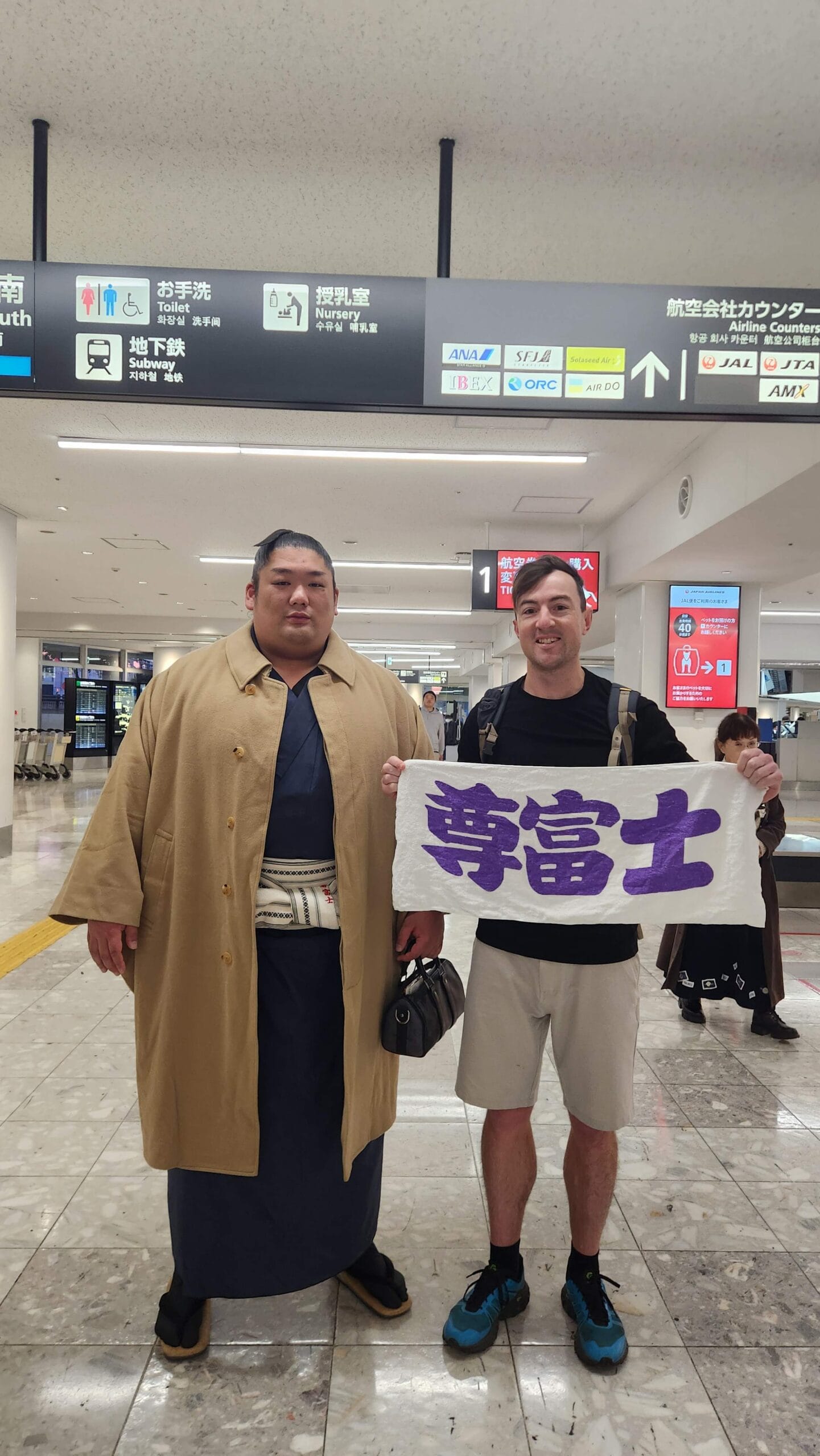
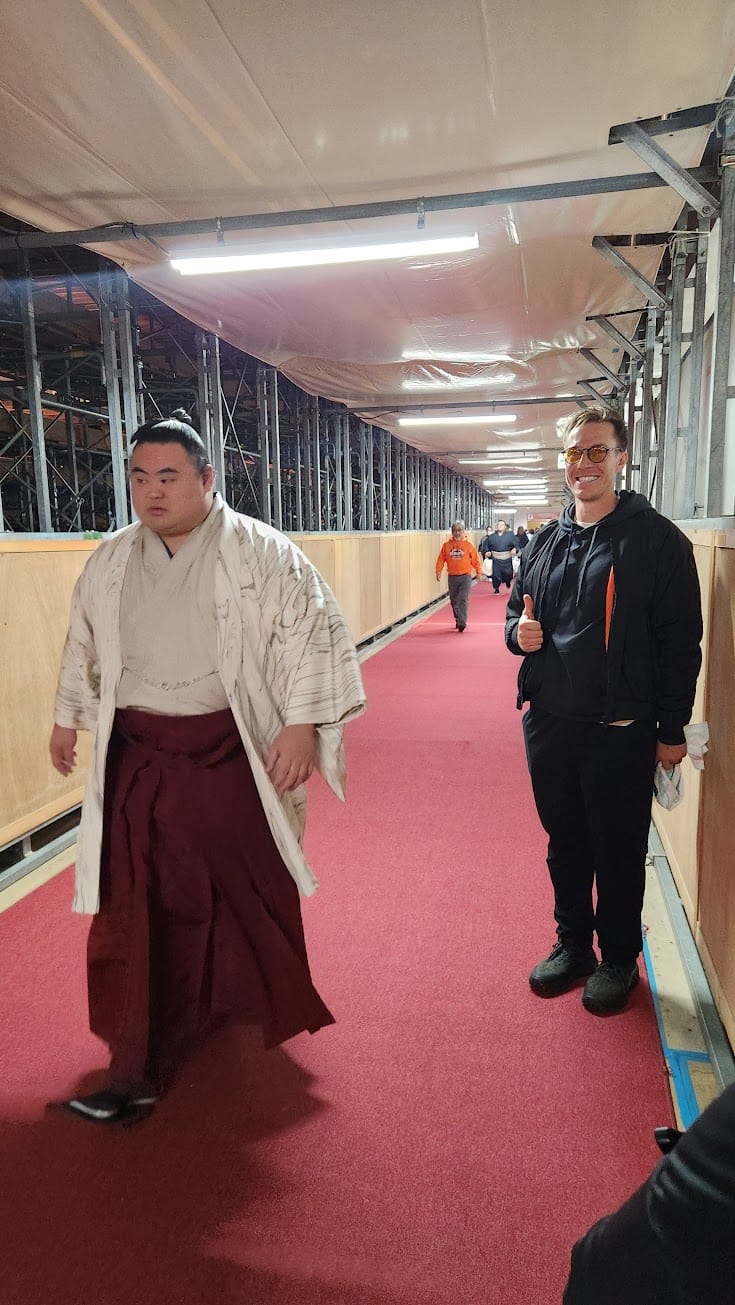
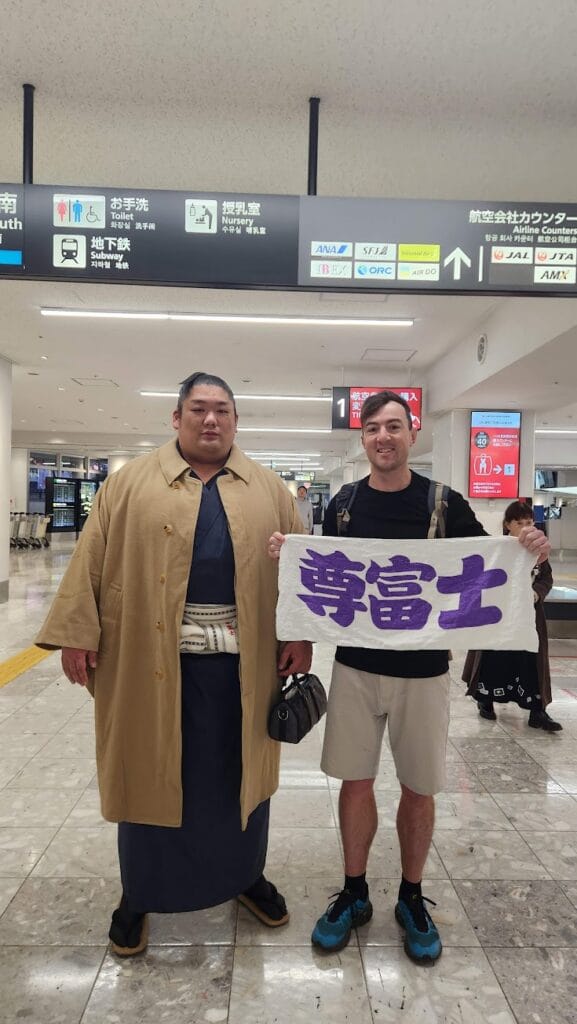
The competition wasn’t just digital. We headed to Fukuoka to witness the action live, managing to secure tickets for Days 6 and 7. There is nothing like the atmosphere of a live Basho, and we even managed to snag some shots with the “big dogs” like Takerufuji.


In the end, the inaugural Sumo Stables title came down to a nail-biting final day between Leighlan and me. Leighlan had been the model of consistency, racking up Day Points throughout the tournament. On the final Sunday, Aonishiki and Yoshinofuji secured me a mountain of bonuses, bringing the score within a hair’s breadth. But alas, no Chanpon (the celebratory feast) for me this time—Leighlan held on for the win.

Poor Joe, on the other hand, picked such a disastrous draft that he became the inspiration for our new Handicap Barnstorm rule. We realized that if someone falls as far behind as Joe did, they need a serious “catch-up” mechanic to keep the group chat interesting!




Conclusion: Refined in the Ring

Since this was our first official Sumo Stables match, we were essentially building the plane while flying it, making several rule changes on the fly. However, the experiment was a massive success. The combination of Python-driven data, a custom Google Sheets engine, and the raw energy of the Fukuoka tournament transformed us from casual observers into obsessed Oyakata (even the tour guide didn’t have the knowledge we had!). We’ll be back for the next tournament—sharper, data-richer, and ready for the draft.


From Finance Analyst to Sumo Data Master: Building a Sumo Dashboard for the Fukuoka Tournament

TLDR: I’m a finance analyst who knew zero Python, but I used Gemini to write all the code, connect to a public Sumo API, and build a clean, simple data dashboard called Sumo Stats. I made it so my friends and I can analyze unique stats—like how small rikishi beat giants but lose to mid-weights—before our trip to the Fukuoka Grand Tournament!

The Arena of Inspiration: Why I Built a New Sumo Dashboard

As a Finance Analyst, I live in spreadsheets, pivot tables, and dashboards. My world is about taking complex data, finding the patterns, and presenting a clear story. Recently, my interest shifted from quarterly earnings to rikishi (Sumo wrestlers).

This November, my friends and I are heading to Japan to see the final Grand Sumo Tournament (Basho) of 2025 in Fukuoka! We’ve all recently gotten hooked on the sport, and naturally, our group chat exploded with stats and predictions.

I started looking for online dashboards we could use to easily track our favorite wrestlers and make informed predictions. What I found was often overly technical, cluttered, or just not user-friendly.

I didn’t need a complex academic tool; I needed a simple, clean dashboard that anyone in our group could use to see the unique factors—height, weight, and winning techniques—that influence the bouts. I wanted to share something easy for my friends to get excited about, and I wanted to learn to use coding in the process.

AI: The Ultimate Code Shortcut

My biggest obstacle was simple: I had strong analytical skills from my finance background, but no way to actually obtain the historical Sumo data. The solution came when I found a public Sumo API. The data was available; I just needed a way to ask for it. I decided to treat this project as my personal coding crash course, with Gemini as my technical co-founder. I didn’t master Python; I used AI to write the Python. I’d give it the prompt: “Connect to the data source, extract the entire history of bouts, and save it to a CSV file.” My ‘Aha!’ moment came when I successfully ran that first major extraction, seeing thousands of bout records instantly appear in my Google Drive. The barrier was broken, and I knew I could build a simple, powerful tool for the Fukuoka trip!

The Sumo Stats Pipeline: From Raw Data to Live Dashboard

Using my finance background in process design, I structured the data pipeline:

  1. Extraction: Python code (written by Gemini) connects to the Sumo-API and pulls the raw data as a CSV.
  2. Automation: I upload the CSV to Google Drive. Gemini then helped me write an App Script that automatically imports and updates the data into Google Sheets, keeping the dashboard current!
  3. Visualization: I imported the data from Google Sheets into Looker Studio (Google’s dashboard tool), where I applied my analyst skills to design the visual layout—simple, clean, and focused on our key questions.

Sumo Stats is Born! Unique Insights for the Fukuoka Draft

The power of this dashboard lies in the unique insights we can now use to impress (and probably annoy) each other with predictions during the Fukuoka tournament. Plus, these stats will be critical for the Sumo Stable/Draft we’re planning, complete with trades and replacements throughout the tournament!

Here are a couple of my favorite findings so far:

  1. Height and Weight Match-up Dynamics: It’s not a simple case of “heavier is better.” I found that the small rikishi actually perform quite well against the very heaviest opponents, often outmaneuvering them. However, they tend to struggle the most against the medium-weight wrestlers, who seem to possess the perfect balance of mass and agility to counter them. This discovery proves that it’s not just about size; it’s about the match-up dynamics.
  2. The Daily Bout Winning Trend: By analyzing daily win/loss ratios across tournaments, I noticed a fascinating trend: some rikishi are truly “morning fighters” or “closers.” Certain wrestlers do exceptionally well on the early days of a tournament but fade later, while others are slow starters who dominate the final weekend. Tracking these patterns will give us a huge edge in our Stable/Draft picks!

The dashboard also provides deep dives into Kimarite (winning techniques) ratios, allowing us to see which technical moves are the most reliable. We’re going to be the most prepared group heading into Fukuoka!


Your Skills Are Transferable: A Call to Action

I started this project to create a simple tool for a trip with friends, with zero confidence in my coding ability. I finished it with a live, sophisticated dashboard and a newfound appreciation for what I can accomplish with AI assistance.

This journey is proof that:

  1. Your professional skills are powerful, and they are transferable.
  2. AI is an indispensable tool for turning personal ideas into reality.
  3. You can and should use AI to adapt the skills you already have to new challenges!

If I can use my skills in SQL, pivot tables, and financial analysis to build a sophisticated Sumo dashboard, imagine what you can build by applying your expertise to your own passion project. Go find your AI co-pilot, and start building!

Sumo Stats Dashboard

Welcome to the dashboard! This tool is designed to provide a comprehensive and unique perspective on professional Sumo, moving beyond simple win/loss records to analyze the key physical and technical factors that influence match outcomes.

I became interested in Sumo Wrestling recently and always enjoyed looking into the statistics and bouts. I saw some solutions for this online but never one that really was a good fit for purpose. I don’t know any code, but with the help of my good friend Gemini, I was able to build this dashboard. I have applied the skills in dashboarding (although I was unfamiliar with Looker Studio) from my experience as a Financial Analyst to visually represent the data and insights. I hope you enjoy! A full blog post to come on the effort and skills I had to use in creating this dashboard [From Finance Analyst to Sumo Data Master: Building a Sumo Dashboard for the Fukuoka Tournament]

A big thank you to https://www.sumo-api.com/ for providing a way for me to bring this to life.

Native link here: https://lookerstudio.google.com/reporting/22b652fc-0032-4890-b47a-142990181a6c

Full Dashboard